

As a specialist B2B marketing agency, we encounter a variety of challenges in the B2B market. One that stands out above all is the way content is utilised. The reality is that most B2B content dies before it can even get started due to an ineffective or non-existent distribution plan behind it.
B2B marketing teams are normally small, and what we find is that these teams tend to over-invest in the creation of detailed, helpful content – but under-invest in the distribution strategy, meaning their content normally remains unseen by the right people.
In this article, I detail the different methodologies that exist to accelerate a B2B brand’s content distribution strategy. This includes how to best utilise your Owned, Earned and Paid distribution channels, as well as demonstrating the value of an old-school content calendar – and of course, how we measure it all.
Why great B2B content fails without a distribution strategy
There’s two common scenarios we come across when working with B2B marketing teams: there’s not enough content being published; or there’s a sufficient amount of content being published, but teams are stuck in a “publish and pray” mindset – hoping the internet will perform miracles in getting that content in front of the right people.
When this happens, not only are you not reaching your audience in an effective way, but your measurement of success becomes skewed. If you over-rely on website/Organic traffic being the single source of failure, you could end up tunnel-visioning yourself into oblivion.
Websites are still vitally important, yes – but they are no longer the only surface your audience will be researching on. For example, our audience data from SparkToro shows a significant portion of B2B audiences are spending more time on platforms like Reddit, Substack & Medium over LinkedIn, Instagram or Meta because of the high saturation of AI content on the latter platforms. This shows a clear need to update and diversify content distribution strategies.
Distribution cannot be seen as an afterthought – it needs to be part of your content strategy from day one. Ask questions like “who do I want to read this?”, “what pain point am I addressing with this audience?” and “is this going to be genuinely helpful and memorable?” and you’ll quickly narrow down where the most effective places are for your content.

Owned distribution: email, newsletter, website
For B2B brands, email marketing (i.e. regular newsletters) tends to be the most effective distribution channel that you have high control over. There are obvious dependencies here, such as a list of relevant & engaged recipients that have granted consent to be contacted. GDPR rules prohibit the distribution of email marketing without the user’s express consent to be contacted.
Despite all of the changes we’ve experienced through the last 3 years with the rise of Generative AI in digital marketing, websites are still the “home” of your content and a crucial data source that feeds Search Engines & LLMs alike with the information they need to return the best result for their end-user.
Here are some practical tips for getting started with our Owned distribution, even before creating anything net-new:
Audience segmentation
User research is absolutely essential before commencing any business strategy, let alone a content distribution strategy. By understanding where your audience hangs out online, what they talk about & what pain points they resonate with, you’ll already be far ahead of a lot of B2B brands.
In terms of segmentation, the absolute bare-minimum should be identifying the different decision makers that exist in your market. This depends entirely on your business, but you’ll normally find at least two buying groups – i.e. if you’re an IT consultancy, you’ll likely have to sell to the Owner/Operator of some businesses (who may be less technical and have their own considerations) as well as a Head of IT that works within the business at the moment but requires additional support (more technical audience, different considerations to the owner).
From here, you should identify the Top, Middle & Bottom-funnel considerations of each audience group, produce the content and distribute effectively to areas of the internet where you know they engage and spend time. This kind of buyer-stage mapping is exactly what we explore in our guide to nailing your category entry points.
Resurfacing older content
This is my absolute favourite quick-win for any B2B brand as it’s almost guaranteed to yield quick results. When a piece of content exists on the internet, it gains authority and trust from algorithms (and humans) over time, but will start to decay the longer it’s left untouched and will eventually become stale.
This doesn’t mean the content is dead – it just needs updating and refreshing. Sometimes it can take a handful of tweaks and a stamp on the page to show when it was last edited for that seemingly dead piece of content to be revived.
Internal linking
Internal linking is a no-brainer for content distribution. We can’t assume that your user knows how to navigate the complexities of your website, and instead we must make their journey as seamless and frictionless as possible.
Clear internal linking being used as signposting is effective at keeping your audience engaged, reducing bounce rate, and ultimately getting the most out of your Owned content (website).
It’s worth applying the same thinking to how you group related content together – we’ve written before about the role of content hubs in giving your best work a permanent, well-linked home rather than letting it get buried.
Earned distribution: PR, backlinks, social sharing
Digital PR is often filed under “brand awareness” or “backlinks”, but it’s one of the most underrated distribution channels available to B2B brands. Getting your research, data or commentary picked up by a publication your buyers already trust does more for distribution than almost any other tactic – it puts your content in front of an audience at the exact moment they’re primed to pay attention, and borrows the credibility of the outlet in the process.
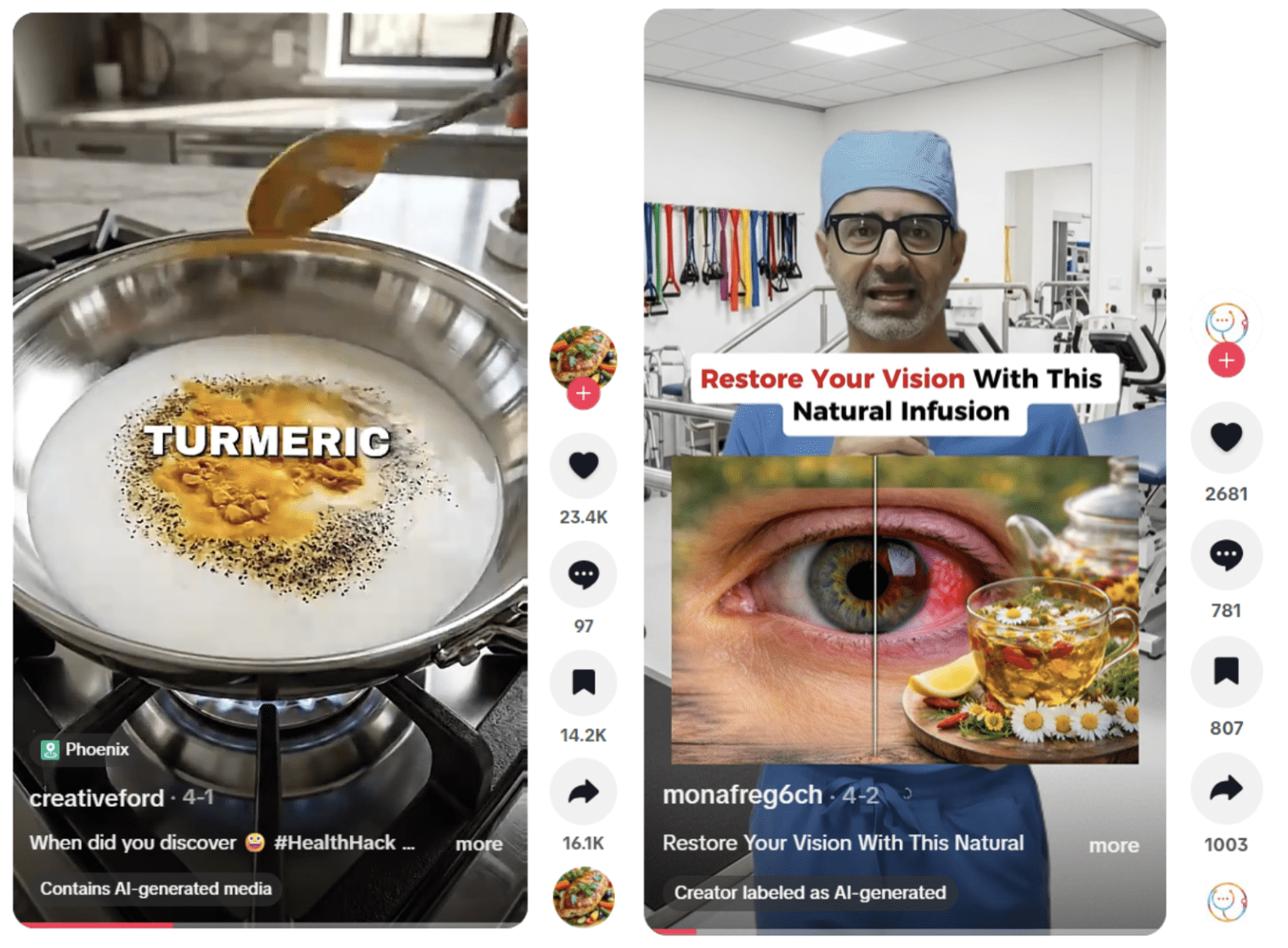
We saw this first-hand recently when The Guardian picked up our TikTok AI study, which found that 1 in 5 top TikTok videos in life-impacting industries are now AI-generated. That single piece of coverage did more to distribute the research than website traffic alone ever could have – it reached readers who would never have found the original blog post, and the resulting backlink and brand mentions continue to compound in value long after the story ran.
Backlinks earned through Digital PR compound in a way paid media never will – each new link signals to Google (and increasingly, LLMs) that your site is worth citing, which matters as much for AI-generated answers as it does for traditional rankings. If content amplification b2b is on your radar, Digital PR belongs alongside paid promotion, not as a separate discipline. We’ve gone into more detail on how to measure success in Digital PR if you want to build the case for investing here.
Encouraging organic social sharing and employee advocacy
Social proof from your own team carries different weight to any ad. When we built a LinkedIn employee advocacy programme for a medical logistics client, the data made the case for itself: content shared by an individual employee is seen as three times more authentic and gets twice the click-through rate of the same content from a brand page. Just 3% of employees typically share content about their company, yet those shares alone drive a 30% increase in total engagement – every six pieces of employee-shared content brings roughly three extra company page views and a new follower.
This means that you don’t need every employee sharing daily. A small, consistent group of advocates, equipped with genuinely shareable content and an optimised profile, moves the needle more than a much larger, disengaged following. If you’re building this out for your own team, our guide to optimising your LinkedIn profile is a good place to start.
Paid distribution: LinkedIn sponsored content, content syndication
LinkedIn is still the default paid channel for B2B, but the format matters more than most teams assume. Single Image Sponsored Content works best for early-stage awareness paired with a tightly defined account list. Document Ads, which let people preview and download a PDF in-feed, suit senior decision-makers further along in their evaluation – though only if the asset itself is genuinely good. With the average B2B deal now involving six to ten stakeholders, one ad format aimed at one persona rarely does the job on its own. Our guide to LinkedIn advertising tips, costs and how it works is a useful primer if you’re new to the platform.
What is content syndication and when it’s worth paying for
Content syndication means sharing the same piece of content across third-party platforms or partners – international markets, affiliated newsletters, partner sites – to borrow an audience’s trust in the host rather than your own.
Some routes are free (LinkedIn, Medium and Quora will host repurposed content at no cost), paid networks guarantee placement and lead delivery instead. It’s worth paying for once you’ve got proven content and need to reach decision-makers beyond your own list at scale.
It’s not worth it for mediocre content, or if you can’t customise the asset per channel – that’s just “publish and pray” with a media budget attached.
Content amplification platforms worth testing
Beyond LinkedIn’s own formats, native advertising networks like Outbrain and Taboola (now merged, reaching an audience of 2.6 billion) are worth testing once you’ve got a bigger amplification budget.
They serve content recommendations matched to a reader’s interests, so they suit thought-leadership content better than hard product pitches. Start with one strong asset and a tightly defined UK audience, and only expand once you can see which placements drive qualified traffic rather than impressions.
Which Substack, Medium, and newsletter platforms work for B2B
This is the section most B2B content guides skip entirely, which is exactly why it matters. Our own audience research using SparkToro shows B2B audiences increasingly over-indexing on platforms like Substack and Medium, at the expense of the more saturated, AI-content-heavy feeds of LinkedIn and Meta. If your audience is already there, publishing only on your own website means you’re invisible to a growing part of your market.
The three main options work very differently, so the right choice depends on what you’re optimising for:
- LinkedIn Newsletter – best for building reach from zero, thanks to automatic notifications to your existing connections – though you don’t own the list.
- Substack – best for ownership: you own and can export your subscriber list, with a more intimate, email-first relationship and built-in monetisation.
- Medium – best for discovery, thanks to its algorithm and strong Google visibility, though you don’t own the reader relationship.
The general advice is to commit to one platform for at least 8-12 weeks before judging results, rather than spreading a small team across all three. It’s exactly this reasoning that led us to launch Hallam’s own newsletter on Substack this quarter – a deliberate move to build a channel we own outright, rather than relying solely on our website and LinkedIn’s algorithm.
Building a B2B content distribution calendar
A content calendar tells you what you’re publishing and when. A distribution calendar tells you what happens to that content after it goes live – and most B2B teams don’t have one. Without it, distribution becomes an afterthought squeezed in on publish day, rather than a planned, repeatable process.
At a minimum, map out the following for every piece of content you produce:
- Channel – where it will be distributed (owned, earned, paid, or a specific platform)
- Cadence – when and how often it goes out
- Owner – who is responsible for actually pushing it out, not just writing it
- Repurposing plan – how it gets reformatted for other channels (a blog becomes a LinkedIn carousel or a Document Ad, for example)
A simple version of this can live as an extra tab in whatever content calendar you already use. The point is that distribution becomes a scheduled, owned task rather than something you hope happens organically.
How to measure content distribution effectiveness
Different channels need different metrics, and measuring them all against the same yardstick (usually website sessions) is where most B2B distribution strategies fall down.
- Owned – email open rate, click-through rate, and traffic resurfaced content drives against its previous performance.
- Earned – referral traffic from coverage, share of voice, and new backlinks or brand mentions won.
- Paid – cost per click, cost per lead, and for syndication, the quality of leads delivered rather than the volume.
The most important habit is tying these back to business outcomes, not vanity reach – a piece with modest traffic that generates three qualified sales conversations is doing its job; one that goes viral but drives no pipeline isn’t. Build a simple monthly review into your reporting cadence so distribution decisions get revisited as often as content ideas do.
Content distribution isn’t a bolt-on to your content strategy – it’s the strategy. Creating excellent content and hoping the internet finds it is no longer a viable plan, particularly as B2B audiences spread themselves further across owned, earned and paid channels, and across platforms like Substack and Medium that most brands haven’t even considered yet.
The brands that win here are the ones that plan distribution with the same rigour as content creation – and that treat the website as one important channel among several, not the only one. If you’d like help building a distribution strategy of your own, get in touch with the team.