

AI slop is no longer confined to “fruit brainrot” videos or engagement bait. It is now appearing in some of the most important information searches on the internet.
New research from Hallam analysed more than 1,000 TikTok videos to understand how much AI-generated or AI-assisted content is appearing across the search terms that can have a real impact on people’s lives.
The study focused on high-stakes areas of information, including health, money, education, careers and public information – topics that influence everyday wellbeing, financial security, learning outcomes, job prospects and trust in institutions.
Across 25 search terms, including “doctor advice”, “saving money”, “financial literacy”, “memory hack” and “StudyTok”, the report found that one in five top TikTok videos are now AI generated.
AI content is spreading faster across TikTok in health, money and education advice
Across the 1,198 TikTok videos analysed, 235 showed signs of AI generation or assistance across health, finance, education, careers and public information searches.
The clearest warning sign in the engagement data is how often AI content is being shared on TikTok. AI-generated or AI-assisted videos generated an average of 7,856 shares per video, compared with 7,221 for non-AI videos – meaning AI videos were shared around 9% more often.
| Video type | % of total | Avg likes | Avg comments | Avg shares |
| AI videos | 19.6% | 🔴 ↓ 44.5k | 🔴 ↓ 496 | 🟢 ↑ 7.9k |
| Non-AI videos | 80.4% | 69.4k | 791 | 7.2k |
In advice-led searches, where users are looking for guidance on health, money, studying, careers and public information, the fact that AI content is being shared on more often raises a clear concern: AI-generated advice may be spreading further than users realise, and reaching new audiences outside of original search results.
Jake Third, CEO at Hallam comments:

“AI-generated content is no longer confined to harmless entertainment. It is now appearing in videos about everything from doctor advice and mental health tips to investing, banking, studying and career progression.
“That creates a real regulatory concern. When people search for information that could affect their health, financial security or future opportunities, they should be able to clearly understand who is behind that content, whether AI has been used, and whether the information has been checked by a qualified human expert.
“This comes at a time when TikTok is already facing questions over how AI is being used on the platform, after reports that it scaled back an AI-generated video descriptions feature following incorrect and bizarre summaries, including one that reportedly described a celebrity as fruit.
“Platforms like TikTok need clearer rules around labelling, visibility and accountability. AI content should be marked directly within videos, not hidden away in captions or small print disclosures, and there should be stronger safeguards when AI is used to create information about regulated or sensitive topics.”
Health: AI is appearing in 40% of health TikTok’s that can influence life-changing decisions
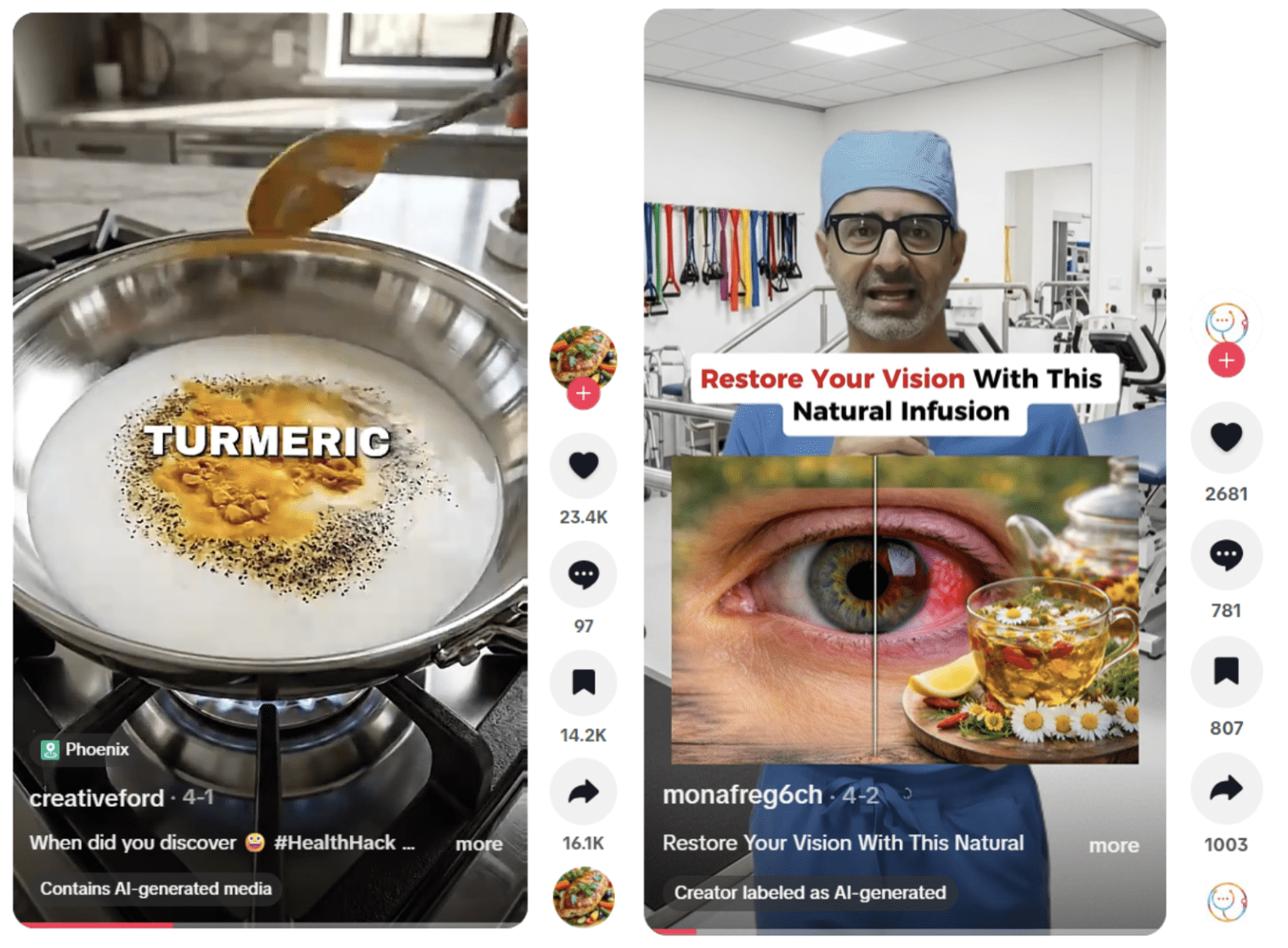
Health was the most AI-heavy category in our research, with “health tips” the most affected search term overall. Of the first 50 videos surfaced for “health tips”, 42 showed signs of AI generation or assistance, meaning AI content accounted for 84% of the top results.
This was followed by “fitness”, where 44% of videos showed signs of AI use, “doctor advice” at 28%, “nutrition tips” at 24% and “mental health tips” at 18%.
Top 5 health-related TikTok search terms most likely to contain AI-generated videos
| Rank | TikTok health search term | Percentage of top videos showing signs of AI use |
| 1 | “Health Tips” | 84% |
| 2 | “Fitness” | 44% |
| 3 | “Doctor Advice” | 28% |
| 4 | “Nutrition Tips” | 24% |
| 5 | “Mental Health Tips” | 18% |
| Overall Health Category Average | 40% | |
How to check health advice on TikTok
- Check whether the creator is a qualified health professional.
- Be wary of videos that promise quick fixes, miracle cures or dramatic results.
- Look for evidence, sources or signs the content has been clinically reviewed.
- Do not rely on AI-generated videos for symptoms, medication, diagnosis or treatment decisions.
- Cross-check important health information with trusted sources such as the NHS or a healthcare professional.
Dan McCartney, Head of Search and Social at Hallam, comments:

“Health advice online has always required caution, but AI raises the stakes. Recent research found that 52% of top TikTok mental health tips contained misinformation. Against that backdrop, our finding that 84% of top ‘health tips’ videos show signs of AI use is serious. It suggests users may increasingly be encountering polished, confident-looking health content without knowing who created it, what evidence it is based on, or whether it has been reviewed by a qualified medical professional.
“A short video can feel reassuring, but it should never replace advice from a qualified medical professional. The safest approach is to treat health content on social platforms as a starting point rather than a diagnosis. Check who is behind the advice, look for named experts or clinical review, be cautious of dramatic claims or quick fixes, and verify important information through trusted sources such as the NHS or a qualified healthcare professional.
“This is the kind of digital literacy we need to be talking about with friends, parents and grandparents. If someone you know is using TikTok for health advice, encourage them to pause, check the source, and seek proper medical guidance before acting on anything they see.”
Education: AI is shaping 25% of the shortcuts young people use to learn on TikTok
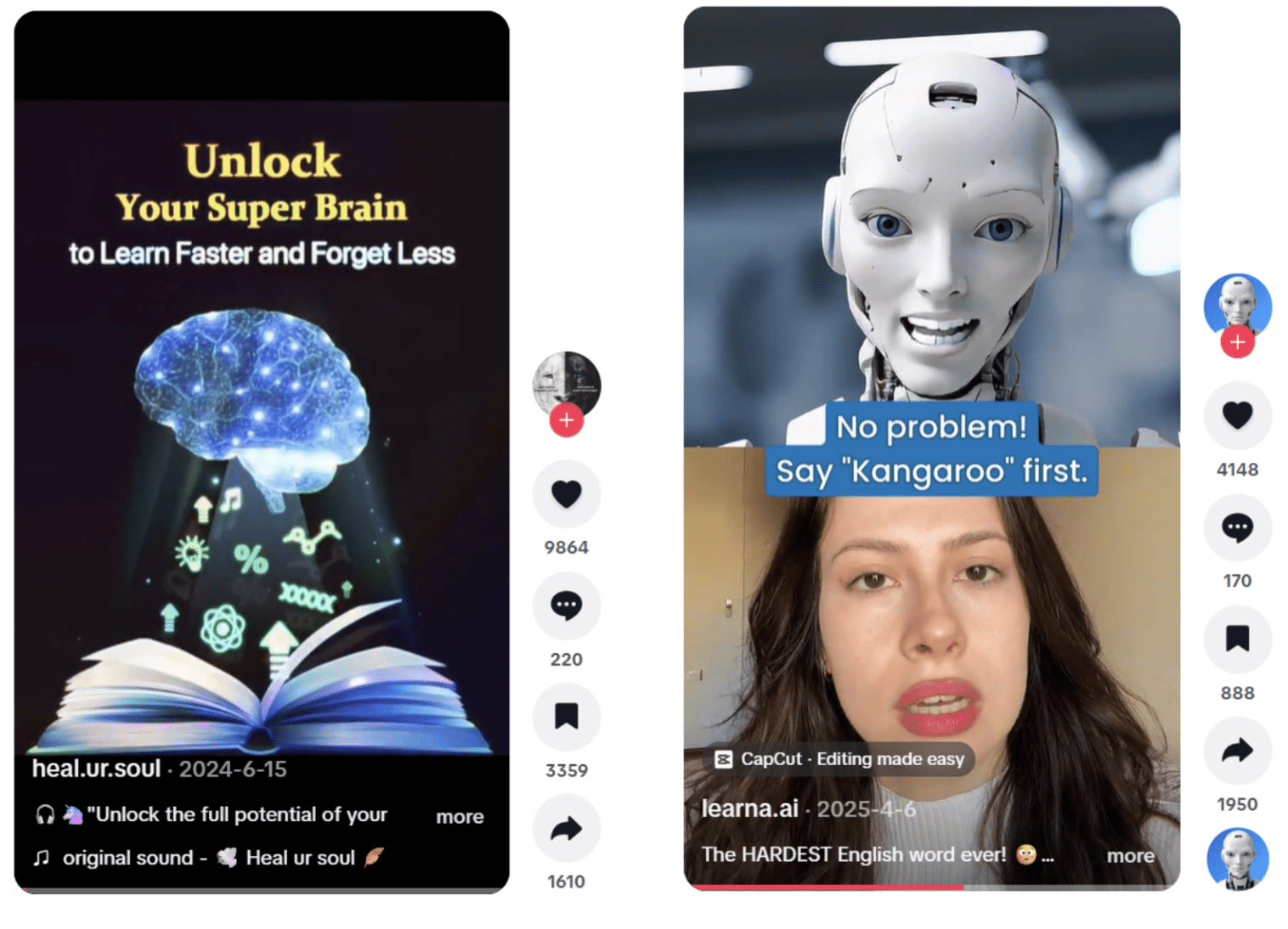
Across all education-related searches analysed, one in four top videos showed signs of AI generation or assistance.
Almost half of TikTok videos surfaced for “learn fast” showed signs of AI use, making it the most AI-heavy education search analysed. “Memory hack” followed at 34%, meaning around one in three results involved AI, while AI appeared in more than one in five “productivity tips” videos (22%).
Top 5 education-related TikTok search terms most likely to contain AI-generated videos
| Rank | Education category | Amount of TikTok videos that contain AI |
| 1 | “Learn Fast” | 48% |
| 2 | “Memory Hack” | 34% |
| 3 | “Productivity Tips” | 22% |
| 4 | “Practice” | 16% |
| 5 | “StudyTok” | 4% |
| Overall Education Category Average | 25% | |
What parents should check before children follow StudyTok advice
- Check whether the creator is a qualified teacher, tutor, academic or subject expert.
- Be wary of videos that promise instant learning, perfect grades or “one simple trick” to master a topic.
- Look for evidence, examples, sources or signs the content has been reviewed by someone with subject knowledge.
- Do not rely on AI-generated videos alone for exam preparation, coursework, technical subjects or complex concepts.
- Cross-check important learning content with trusted sources such as school materials, textbooks, university resources, exam boards or qualified educators.
Radina Ivanova, AI Search Lead at Hallam comments:

“Education content on TikTok can be useful, especially when it helps young people discover new ways to study, revise or stay motivated. But our research shows that AI is now highly visible in the kinds of searches that promise shortcuts to learning, such as ‘learn fast’ and ‘memory hack’. What’s more, Ofcom data shows that 34% of 8 to 17-year-olds believe all or most of the information they see on social media is true.
“When almost half of top ‘learn fast’ videos show signs of AI use, students need to be careful about treating polished, confident or viral content as automatically reliable. AI-generated learning content can look helpful, but it may oversimplify complex subjects, miss important context or present generic advice as if it applies to everyone.
“The best approach is to check who is behind the content, look for clear examples or sources, and compare what you see with trusted educational materials. Parents, teachers and students should also be having more open conversations about how to spot AI-generated study content, when it can be useful, and when it needs to be questioned.”
Money: AI is entering 15% of TikTok searches linked to financial wellbeing
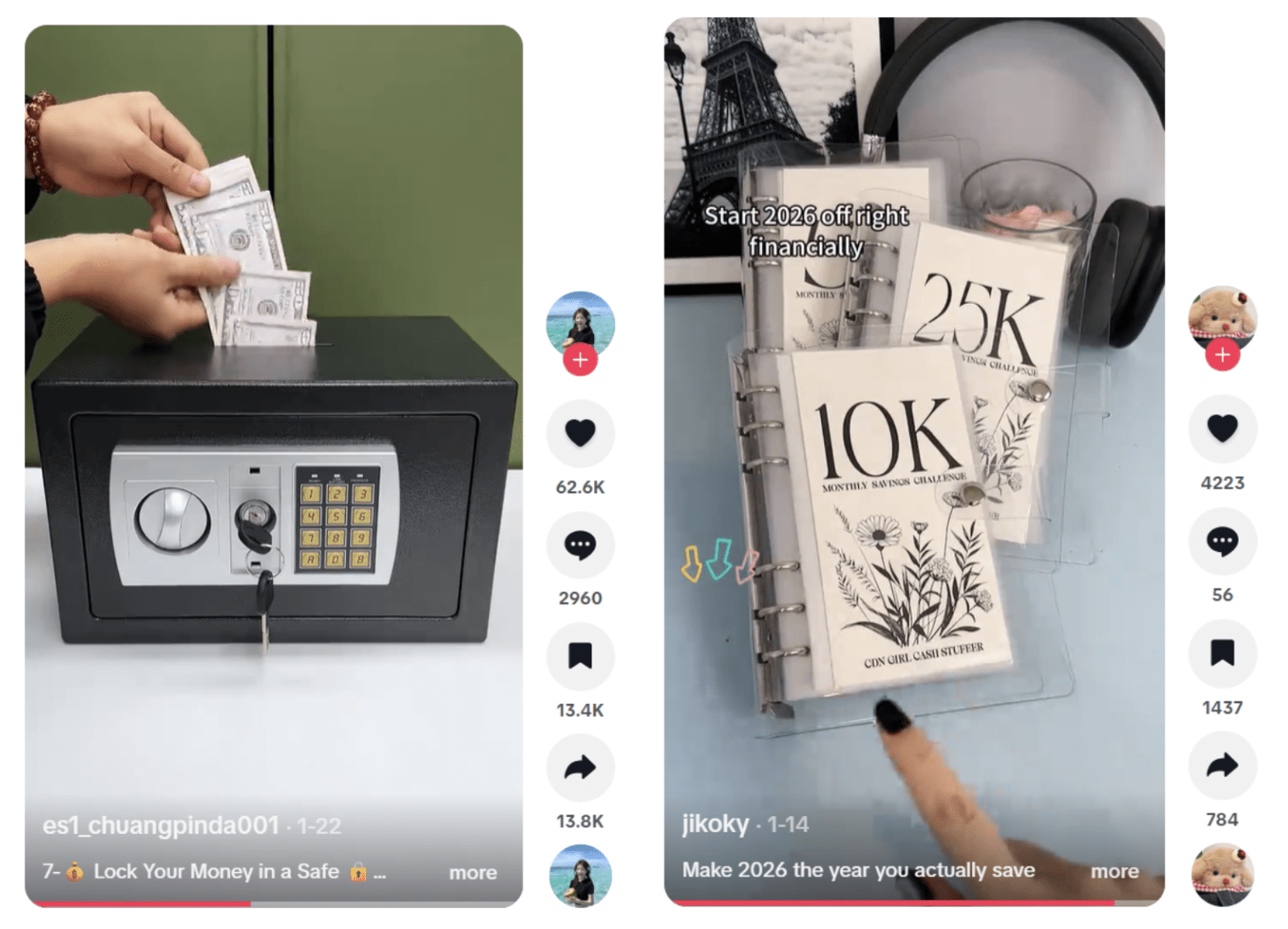
Across finance content on TikTok, “saving money” was the most AI-heavy search term, with one in three videos showing signs of AI generation or assistance.
This was followed by “financial literacy”, where 18% of videos showed signs of AI use, while 10% of “banking tips” videos and 8% of “interest rate” videos contained AI-generated or AI-assisted elements, followed by 4% of “investing” videos showing AI use.
Top 5 money-related TikTok search terms most likely to contain AI-generated videos
| Rank | Search category | Amount of TikTok videos that contain AI |
| 1 | “Saving money” | 33% |
| 2 | “Financial literacy” | 18% |
| 3 | “Banking tips” | 10% |
| 4 | “Interest rate” | 8% |
| 5 | “Investing” | 4% |
| Overall Finance Category Average | 15% | |
How to check financial advice on TikTok
- Check whether the creator is a qualified financial expert or regulated professional, with qualifications such as ‘DipFA’ or ‘CISI’ commonly displayed by accredited personal finance experts .
- Be wary of videos that promise quick wins, guaranteed returns, passive income or “easy” ways to get rich.
- Look for clear sources, explanations, risk warnings or signs the content has been reviewed by someone with financial expertise.
- Do not rely on AI-generated videos alone when making decisions about savings, investments, debt, mortgages, tax or financial products.
- Cross-check important financial information with trusted sources such as the FCA, Citizens Advice, your bank or a regulated financial adviser.
Julie Rodrigues, Finance Director at Hallam comments:

“Financial advice is one of the areas where poor information can have an immediate and lasting impact. Our research shows that AI is already appearing in TikTok searches linked to everyday financial wellbeing, particularly broad topics like saving money. That matters because these are often the first searches people make when they are looking for help, under pressure, or trying to make their money go further.
“Recent research from TSB showcased that of the third of Brits that have acted on financial advice from social media platforms, 55% have lost money as a result. When one in three top ‘saving money’ videos show signs of AI use, users need to be careful about treating polished or widely shared content as reliable financial guidance.
“AI-generated money content can sound confident, but it may miss crucial context around risk, regulation, eligibility, debt, tax or personal circumstances. Content that promises quick wins, guaranteed returns, passive income or easy ways to make money should always be treated as a red flag, especially if it is unclear who created it or whether the person behind it is qualified to give financial guidance.”
Why regulated brands should pay attention on TikTok
With the findings showing how widely AI is already appearing across health, education and financial advice on TikTok, both policymakers and brands have a responsibility to ensure AI-assisted content remains accurate, transparent and clearly accountable.
Radina Ivanova, AI Search Lead at Hallam, comments on the priority actions our government, platforms and institutions should take to strengthen online safeguards, alongside the steps brands can take to reduce regulatory risk, protect audiences and maintain consumer trust:
Three steps governments can take to improve transparency and trust with online content
Radina Ivanova, AI Search Lead at Hallam comments:
1. Introduce clear labels for AI-generated content
“Platforms should be required to clearly label any video content that has been materially generated or altered using AI directly within the video itself. These labels should not be hidden in captions or descriptions, and should clearly state whether the information has been reviewed by a qualified human expert.”
2. Strengthen safeguards for high-risk advice
“AI-generated health, financial and educational advice should face tougher standards than lower-risk entertainment content. This could include requirements to provide sources, display clear warnings and verify professional credentials, particularly where content may reach children or vulnerable users.”
3. Make AI literacy part of education
“Greater emphasis should be provided to teaching young people how AI systems can produce convincing but inaccurate information, as well as how to check claims against trusted sources. “Wider public awareness campaigns could also help adults assess who created online advice, what evidence supports it and whether the source is qualified.”
How brands should approach AI content risk and maintain consumer trust
1. Keep humans accountable for every claim
“AI can support research, scripts and initial drafts, but it should never be responsible for final sign-off. Brands should require every factual or objective claim to be checked against a credible source, with health, financial and educational content reviewed by an appropriately qualified expert.
“Evidence supporting claims should also be stored alongside approval records. A brand remains responsible for its advertising and cannot avoid accountability by blaming an AI tool for inaccurate content.”
2. Be clear when content is AI-generated or advertising
“Brands should clearly disclose when content has been materially generated or altered using AI, particularly where synthetic people, voices, experts or testimonials could mislead audiences. Paid partnerships and influencer content must also be clearly identifiable as advertising.
“Transparency should be visible within the content itself, rather than hidden in captions or small print. Being open about how AI has been used can help audiences assess what they are watching without undermining the creative value of the content.”
3. Introduce stronger checks for high-risk subjects
“Health, finance and education content should go through stricter review processes because inaccurate advice can directly influence important decisions. Brands should verify credentials, include appropriate sources and risk warnings, and avoid presenting general information as personalised professional advice.
“A clear internal AI policy should set out which tools staff can use, what information can be uploaded and who approves content before publication. Regular audits and a rapid correction process will also help brands identify mistakes early and reduce regulatory and reputational risk.”
Methodology
To run this analysis, Hallam created a new TikTok research account to reduce the influence of personalised viewing history, before analysing 1,198 top videos surfaced across 25 search terms.
The search terms were selected to reflect high-trust areas of online information, spanning health, money, education, careers and public information. This included searches such as “health tips”, “doctor advice”, “mental health”, “learn fast”, “memory hack”, “banking tips”, “investing”, “career hack”, “promotion”, “voting”, “policy UK” and “parliament”.
Video results and engagement data were scraped using Zeeschuimer, with only publicly available videos appearing in top TikTok search results included in the study. Each video was then manually reviewed for signs of AI-generated or AI-assisted content, including synthetic voice patterns, AI-style visuals or footage, repetitive script structures, caption styles, visual artefacts and AI-generated music.
The research focused on sectors where accuracy, trust and oversight matter most. In areas such as health, finance, education, careers and public information, misleading or low-quality content has the potential to influence real-world decisions, from how people manage their money and wellbeing to how they understand public issues. The aim was to measure how much AI-generated content is already surfacing in the parts of TikTok’s search ecosystem where human expertise and transparency are most critical.