
Google’s new agentic search box, unveiled at I/O 2026, is being framed as the moment AI takes over the search process.
Type, speak, or upload an image, and an autonomous agent does the legwork – synthesising answers, comparing options, even completing transactions and bookings on your behalf.
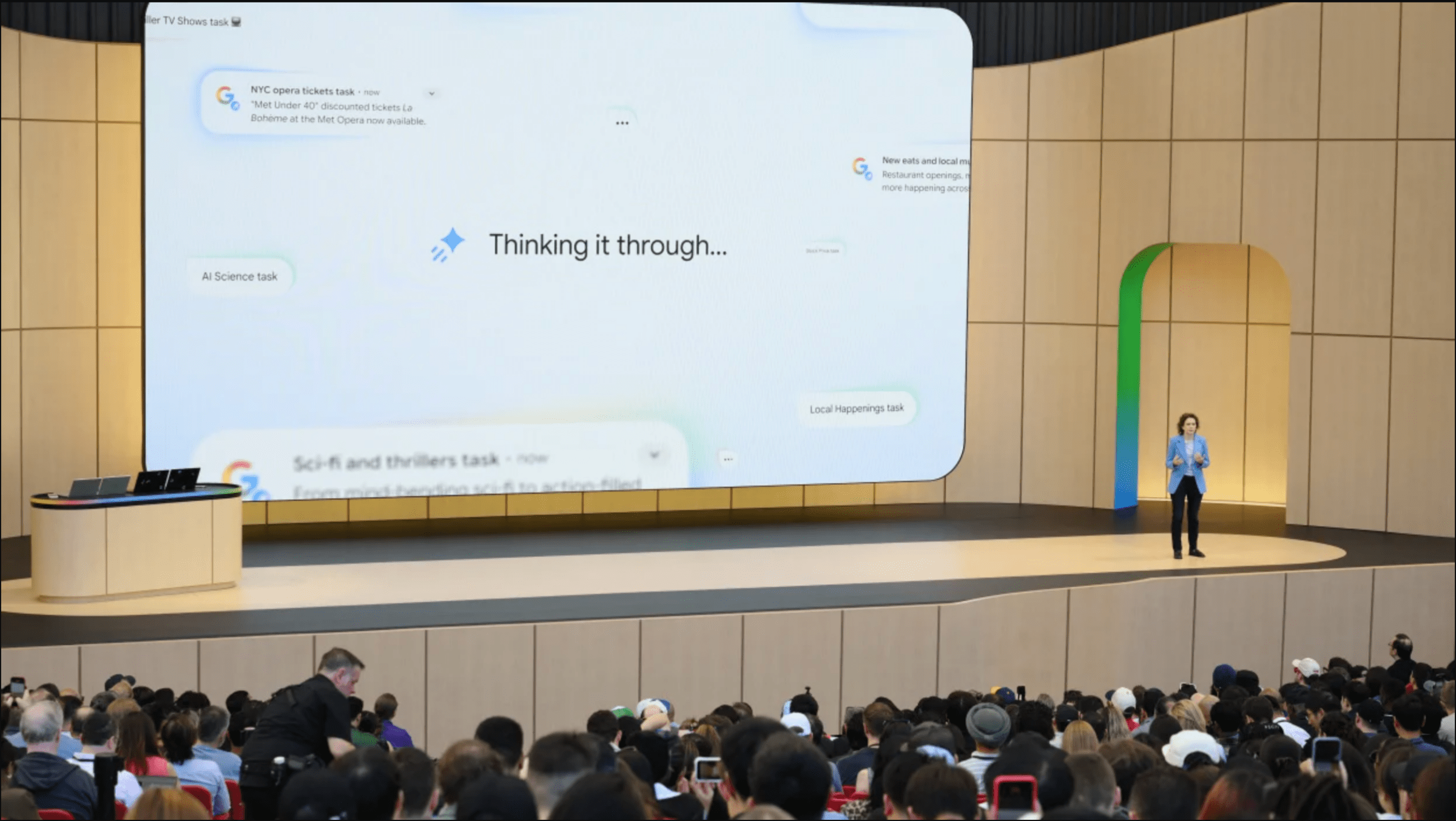
It’s the latest update in Google’s AI push over the last three years, from AI Overviews → AI Mode → and now agentic search. However, the barrier that gets overlooked in all of it is trust.
And until that trust gap closes, the full autonomous experience isn’t going to replace human research in the short term, and especially not in B2B.
AI search adoption is growing, but there’s still a trust gap
A recent survey of 2,202 US adults shows that while adoption is broad (65% have used an AI-powered search tool in the past six months), trust hasn’t followed:
- Only 15% trust the information AI search platforms provide “a lot”
- 63% double-check AI search results against other trusted sources like news websites and review platforms
- 51% say AI results feel like a “walled garden” they can’t verify
- 72% say AI platforms should always show where their information comes from
- 69% want the option to leave the AI platform and visit trusted sites for more information
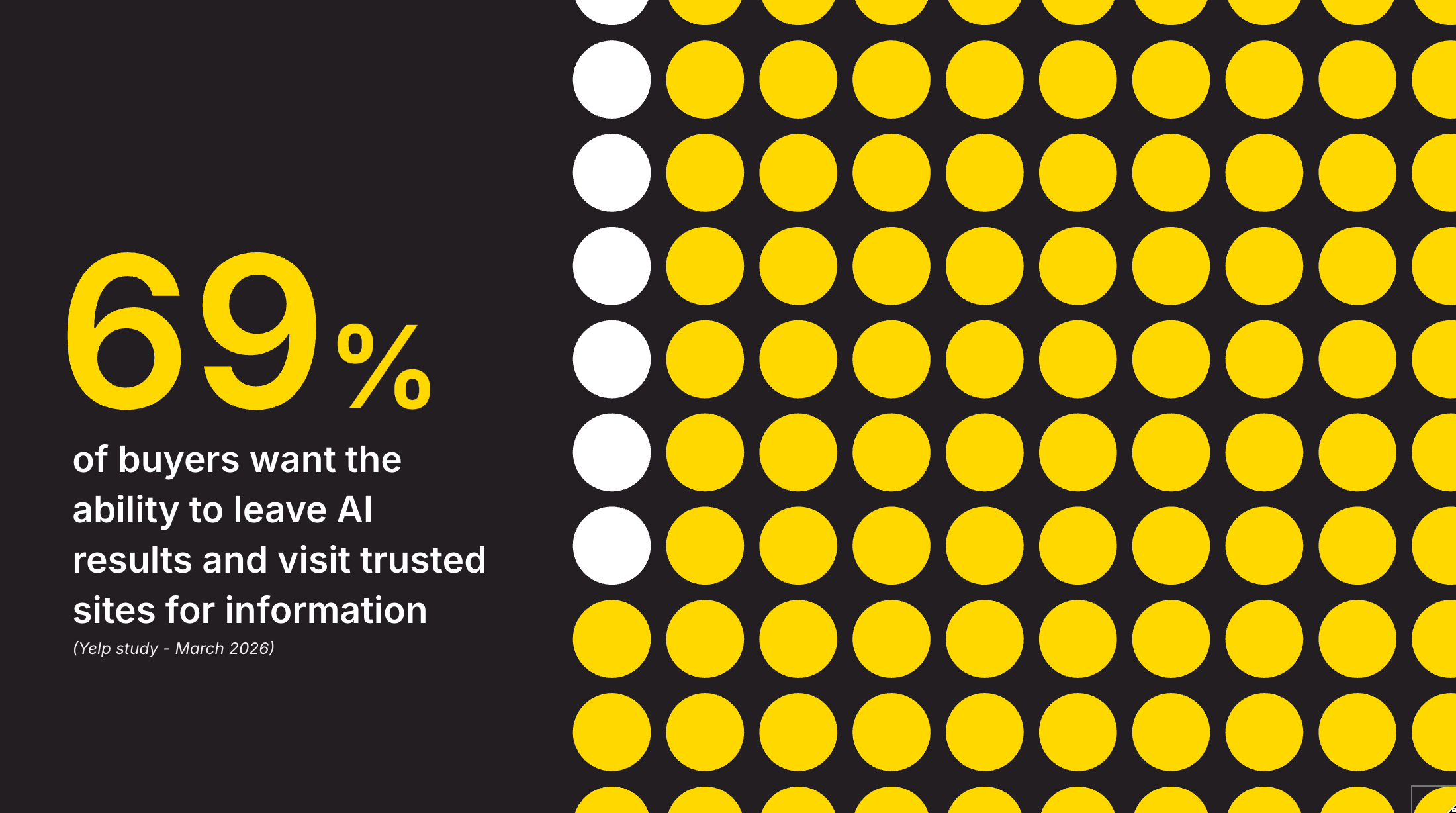
It seems that most people are using AI search to start the process, then validating the answer somewhere they trust.
Which prompts the honest question: would you, right now, let an agent fully run your research and commit your money before visiting a website to make your own decision? A holiday villa for a family trip? A vendor for a six-figure software contract? I certainly wouldn’t.
Risk aversion, not technology, drives B2B buyer behavior
In B2B, the pressure on making the right decision is multiplied.
In the D2C world, booking the wrong restaurant costs you a Saturday night. Picking the wrong enterprise vendor in B2B costs you credibility, budget, and sometimes your job.
Forrester’s data found that 43% of B2B buyers make defensive purchase decisions more than 70% of the time – favouring the safe choice over the innovative one.
Gartner has documented that 77% of B2B buyers describe their most recent purchase as “extremely complex or challenging”, with buying groups now ranging from five to sixteen people across as many as four functions.
This is not an environment in which decision-makers happily delegate the final call to an AI agent!
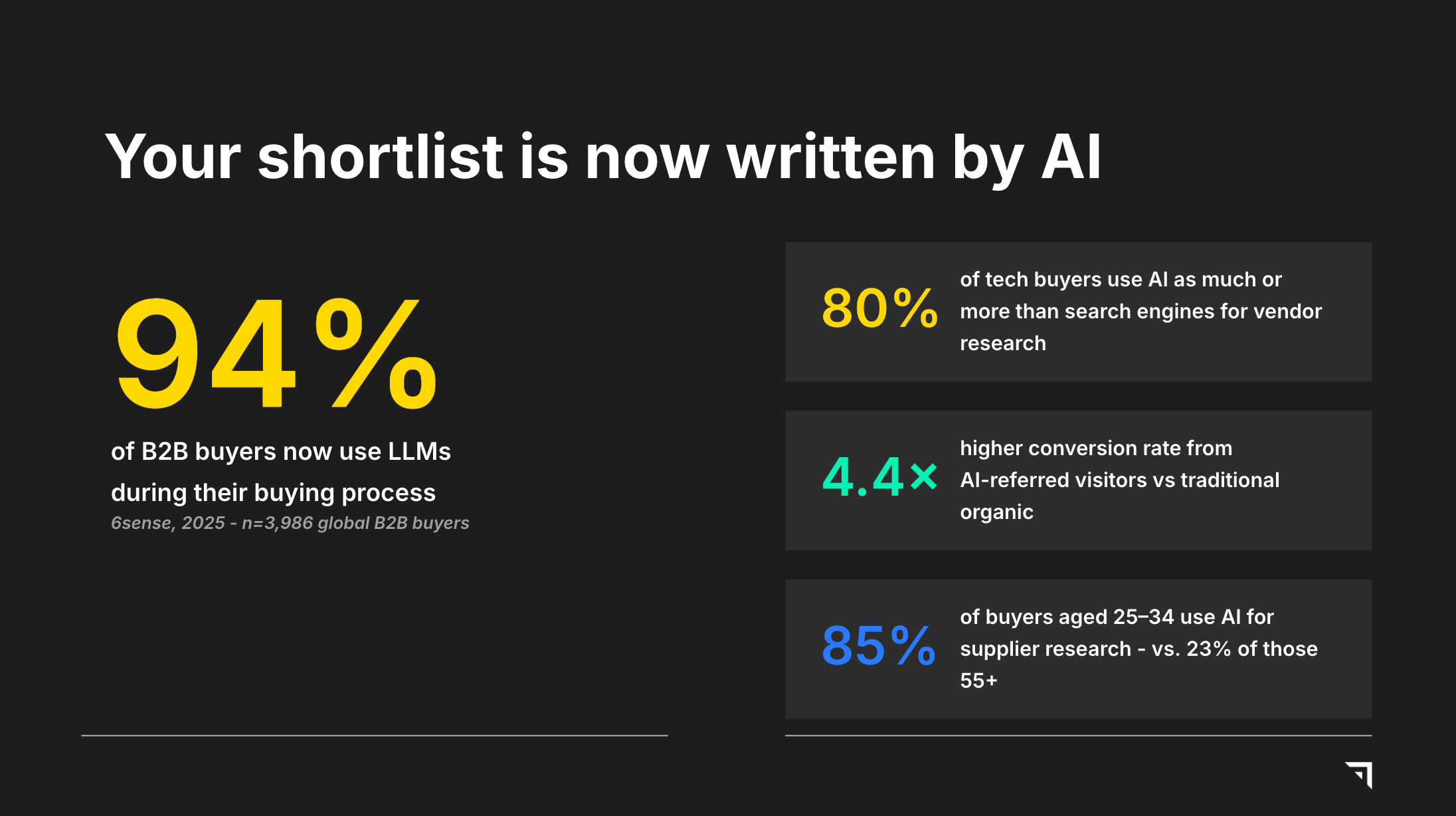
Forrester’s 2026 State of Business Buying research found that while 94% of B2B buyers now use AI during the purchasing process, they explicitly compensate for AI’s limitations by validating what they find against trusted sources – peers, analysts, colleagues, and direct vendor websites. AI is in the workflow. It is not the workflow.
In fact, analysts warn of “confident misunderstanding at scale” – buyers receiving plausible, fluent, confidently stated answers from AI that are factually wrong, outdated, or misaligned with the actual vendor. In a market where many B2B buyers already express dissatisfaction with the provider they ultimately chose, the appetite for adding more risk to the decision is limited.
The upper funnel is collapsing
Search Engine Land reported that US organic search traffic fell 2.5% year-on-year in January 2026, but the headline number understates the picture. Publisher referral traffic from Google has dropped roughly 38% year-on-year. Seer Interactive’s analysis of 5.47 million queries found that when an AI Overview appears, organic CTR fell from a 1.76% baseline to 0.61% – a 61% decline. Pew Research found click-through fell 46.7% when AI summaries appeared.
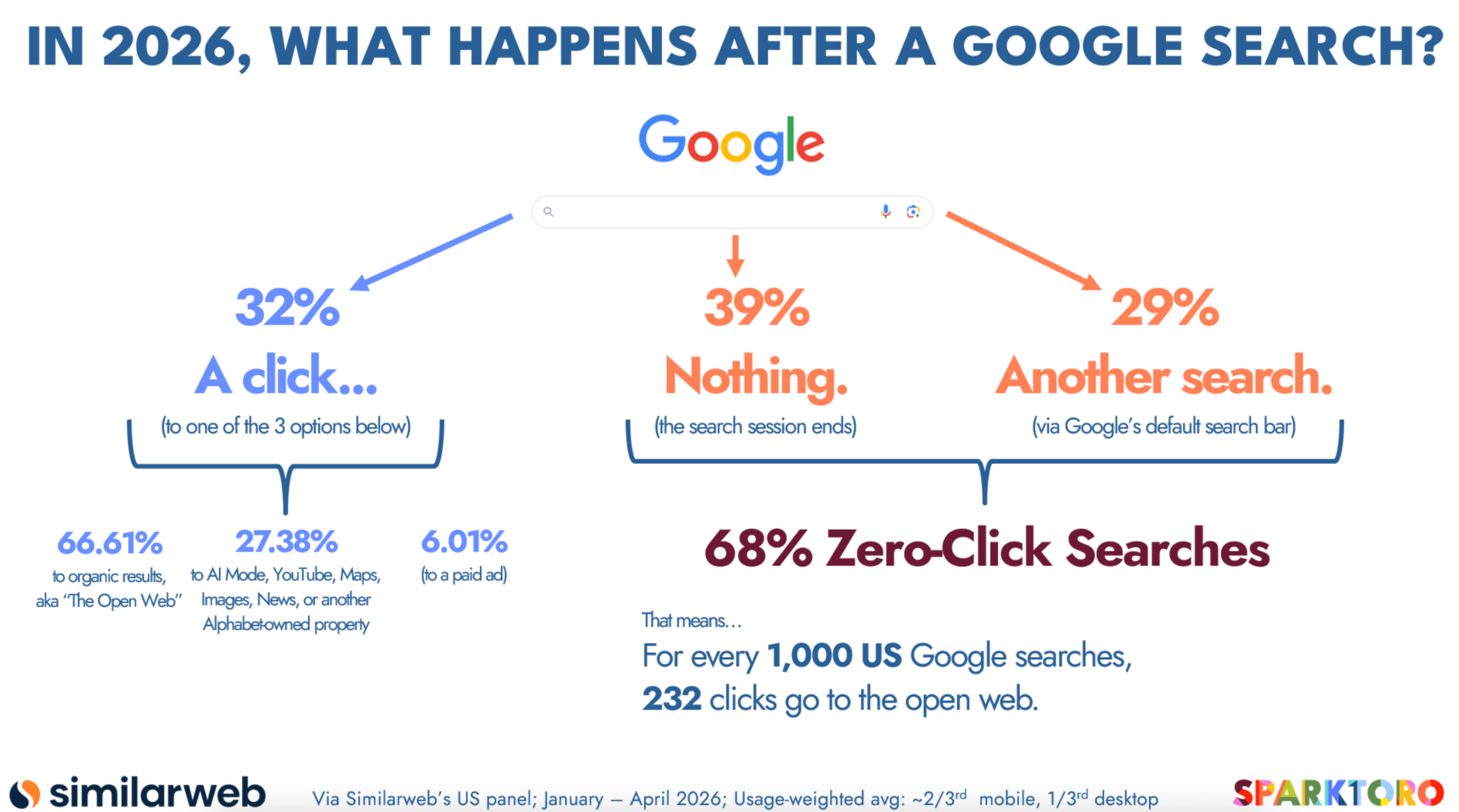
In the first four months of 2026, a whopping 68.01% of Google searches ended without a click
For informational queries specifically, organic traffic declines of 30–40% are now typical. Mid-tier informational content – the “what is X”, the “how do I Y”, the comparison-set builders – is being eaten by AI.
The decision moment is holding
Despite the loss of traffic overall, research shows that AI-referred traffic converts at higher rates than standard organic – approximately 4.4x – because visitors arrive already informed and further along in their buying decision. The clicks that reach the site are the high-intent ones: people who have used AI to summarise, narrow, and shortlist, and have then deliberately chosen to come and verify for themselves.
That mirrors what we’re observing in client reporting:
- Sessions and informational traffic are down materially on AI-eligible queries.
- Conversion volume and lower-funnel KPIs are, in the main, holding up.
AI is collapsing the upper funnel, but users who have pre qualified via AI are still visiting sites to validate their decision and make enquiries directly.
What you should be doing today
Optimise for making the shortlist. AI builds the shortlist, and humans still click, verify, and convert. That means accepting that informational and upper-funnel traffic is a structurally different shape now – and refocusing measurement on assisted pipeline, citation share in AI answers, conversion-per-session, and lower-funnel quality.
Make your brand credible to both humans and machines. The agent layer needs structured, citable, well-sourced content it can confidently quote – which is the foundation of AI Search visibility. Both humans and machines lean on off-site trust signals (reviews, case studies, third-party validation, brand consistency) to both build the shortlist and support the final decision.
Prepare the foundations for agentic commerce now, while the cost is low. This is where standards like WebMCP – co-authored by Google and Microsoft and currently in Chrome 146 beta – come in. WebMCP lets AI agents interact directly with a site’s actions (search, filtering, booking, enquiry) without scraping or guessing at page structure – this is the technical gateway to enable bots to carry out autonomous B2B enquiries and transactions on your website.
In summary
Rather than being replaced, the research process is being augmented by AI, qualifying potential options while users remain firmly in control of the decision.
For now, AI is collapsing the upper funnel. The brands that will win the next eighteen months are the ones that are building visibility in the research phase, increasing their share of model for relevant topics and signalling their authority in the category via trusted third party reviews and recommendations.
Influencing a human shortlist and influencing a machine shortlist increasingly requires the same work. Remember when SEOs scoffed at Google telling them to “build a great brand and a great product” instead of chasing tactics? That advice has never been more important today where most AI search success is seen through building a reputable brand, earning citations, and off-site reviews.
Put simply, being seen as the obvious choice before the search begins will positively influence your visibility when it does.