

For a long time, the B2B buying journey followed a fairly predictable path. A prospect realised they had a problem, typed a query into a search engine, and clicked through three or four articles to build a shortlist of potential solutions. Today, however, that journey is fundamentally different. Today’s decision-makers aren’t starting with Google as often as you think.
Increasingly, they are going straight to Large Language Models (LLMs) like ChatGPT, Claude, and Gemini to get quick answers, compare vendors, and kickstart shortlists before they ever land on your site. They want summaries, comparisons, and recommendations instantly, and they are highly comfortable getting that information directly from AI.
This shift raises a critical question for modern marketers: if buyers are asking LLMs for advice, how do you know whether your brand is actually showing up?
To succeed in AI search, we simply need to adapt our approach, and it’s not necessarily as intimidating as it may initially seem. The fundamentals of SEO remain entirely relevant – good SEO will certainly play a big role in your AI search visibility.
We do however have to recognise that the end goal is no longer just being found on a search engine results page (SERP); it is about being the preferred, trusted answer that feeds the AI models themselves.
The rise of Share of LLM
For more than a decade, B2B marketers have relied on metrics like Share of Search to assess brand demand, understand visibility and track whether people actually care enough to look them up. It is a dependable measure and still one of the strongest indicators of brand health.
However, the way B2B buyers research has changed dramatically. Today’s decision-makers aren’t starting with Google as often as you think. Because traditional search volume does not tell the whole story, we rely on a proprietary framework called Share of LLM (SoLLM).
What is Share of LLM?
Share of LLM measures how often a brand appears in AI-generated answers when users ask questions relevant to its market. If your target audience asks an AI model for the “best HR software for mid-size companies”, and your brand consistently appears in the answers, it means the model recognises it as a credible source. If your brand is absent, the model either does not know it or does not trust it enough to include it.
Think of it as the proportion of mentions, citations or references a brand receives across a large set of LLM responses. So instead of just tracking clicks, we now measure how often a brand is cited, mentioned or recommended within LLM responses.
For more information on Share of LLM and how it compares with Share of Search, download our free whitepaper here.
Why traditional search dominance is no longer a guarantee
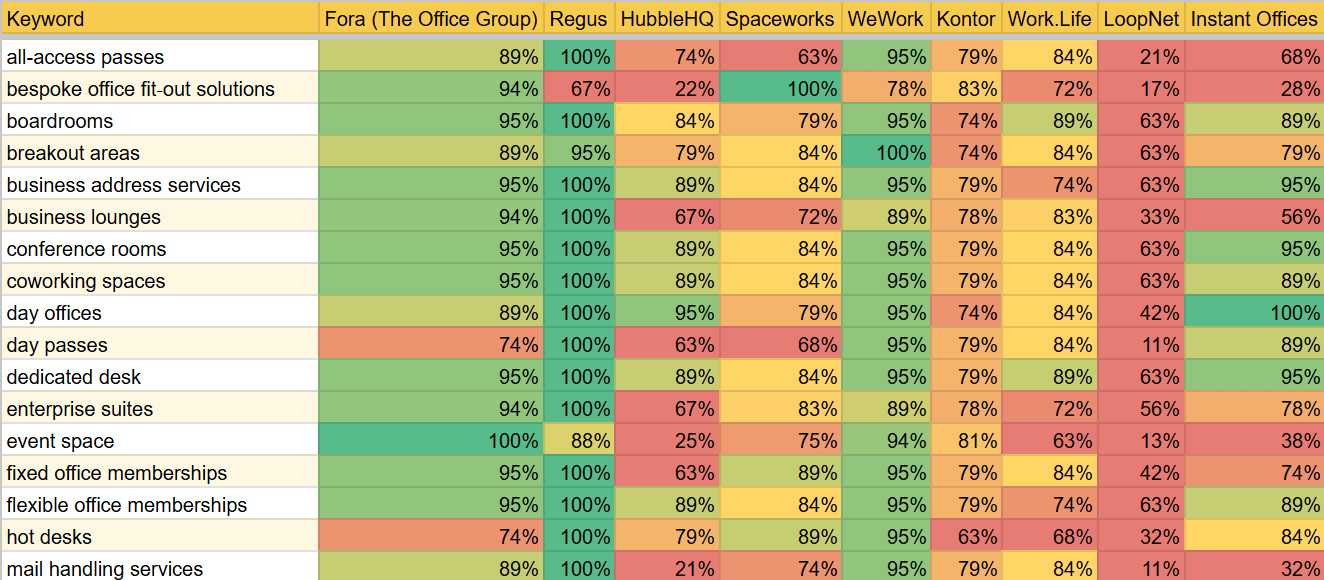
Our research shows a clear link between a brand’s Share of Search and its performance in Share of LLM. However, some brands perform extremely well in search but underperform in LLM visibility. This gap shows that brand awareness alone isn’t a guarantee of AI authority.
AI search is more competitive than Google. In traditional search, a brand can dominate 60 or 70% of demand in a category. In LLMs, it’s almost impossible. Visibility is more evenly distributed, which means every mention counts.
To secure your place in an AI search environment, you must recognise that LLMs reward specific signals:
- Breadth of topic coverage
- Semantically-rich content
- Clear internal linking
- Updated and trustworthy information
- Credibility through reputable mentions
Key takeaway: If your brand isn’t represented in the content the model draws on, you won’t be included in its answers. But your competitors may very well be.
Building your AI SEO strategy
If you are still measuring success solely through keyword rankings and blue links, you are looking at a system that has already been redesigned. To capture today’s buyers, an effective AI SEO strategy requires moving away from simply generating vast quantities of content, and instead focusing on intelligence and genuine authority.
You cannot rely on quick fixes or minor technical tweaks to manipulate language models. Securing LLM visibility is earned through long-term, strategic improvements to your content and brand ecosystem.
Master entity optimisation
Google defines an entity as “a thing or concept that is singular, unique, well-defined and distinguishable”. This could be a person, a place, an object, or an event. Entities essentially help search engines understand the context of your content far beyond basic keywords.
This is important because LLMs don’t just rely on keywords; they rely on meaning and semantic relationships. To succeed in AI search, your website n form a coherent, semantically rich ecosystem. You can achieve this by moving away from fragmented, one-off pages and instead implementing the following structural changes:
- Build strong topical clusters that demonstrate depth across a specific subject.
- Use clear internal linking to connect related concepts across your website.
- Mention your primary entity early and consistently throughout the text.
- Use semantically related keywords to naturally build contextual understanding around your core topics.
For a deeper dive into entities, take a read of my blog that I previously wrote: ‘What are entities in SEO?’.
Strengthen brand signals and digital PR
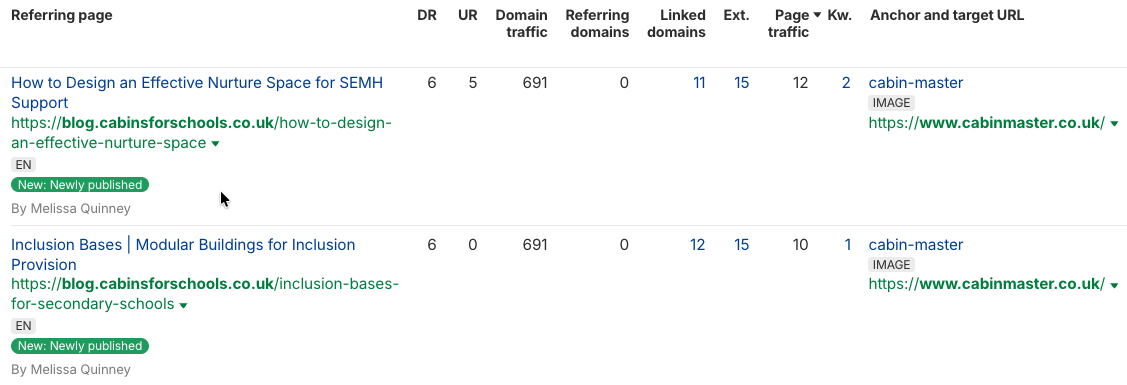
Our research found that branded web mentions are actually up to three times more influential than traditional backlinks when it comes to driving LLM citations.
LLMs use these brand mentions to determine whether your business is widely referenced, which acts as a core signal of trust. If the AI model sees that your brand is respected and cited across the web, it is far more likely to recommend you to users.
To strengthen these signals, you should invest in digital PR and thought leadership to build a robust reputation. Focus your efforts on securing:
- Brand mentions in reputable publications.
- Expert quotes from your internal team.
- High-quality editorial coverage highlighting proprietary data or distinct insights.
Tracking and measuring LLM visibility
One of the biggest challenges for marketers right now is data visibility. The SEO industry has faced a tough few years regarding data attribution, and AI search has added another layer of complexity. Unfortunately, Google has not provided direct tracking data for content appearing in AI Overviews, and we haven’t seen any commitments to do this anytime soon.
However, there are effective workarounds to measure your performance and accurately capture your LLM visibility.
Setting up AI snippet tracking in GA4
To work around these tracking limits, you can set up custom tracking within Google Analytics 4 (GA4). You can track sessions that come from AI Overviews using a custom event, which identifies when a user lands on a URL containing #:~:text=. This specific parameter is a common AI snippet format.
Setting up this custom event allows you to record traffic to URLs directly from overview snippets, helping you capture the passage ranking that brought the user to your site. If you are unsure how to configure this, our Data and Insights team could help you with an audit of your setup and uncover organic opportunities.
Monitoring AI referral traffic
Moving beyond Google’s AI Overviews, you must also monitor direct referral traffic from platforms like ChatGPT, Perplexity, and Claude. GA4 can help here too. You can set up an exploration report that filters traffic using regular expressions (regex) to quickly identify and summarise sessions originating from these AI platforms.
Using third-party tools for daily tracking
While first-party data is crucial, third-party platforms are required to track your daily keyword presence.
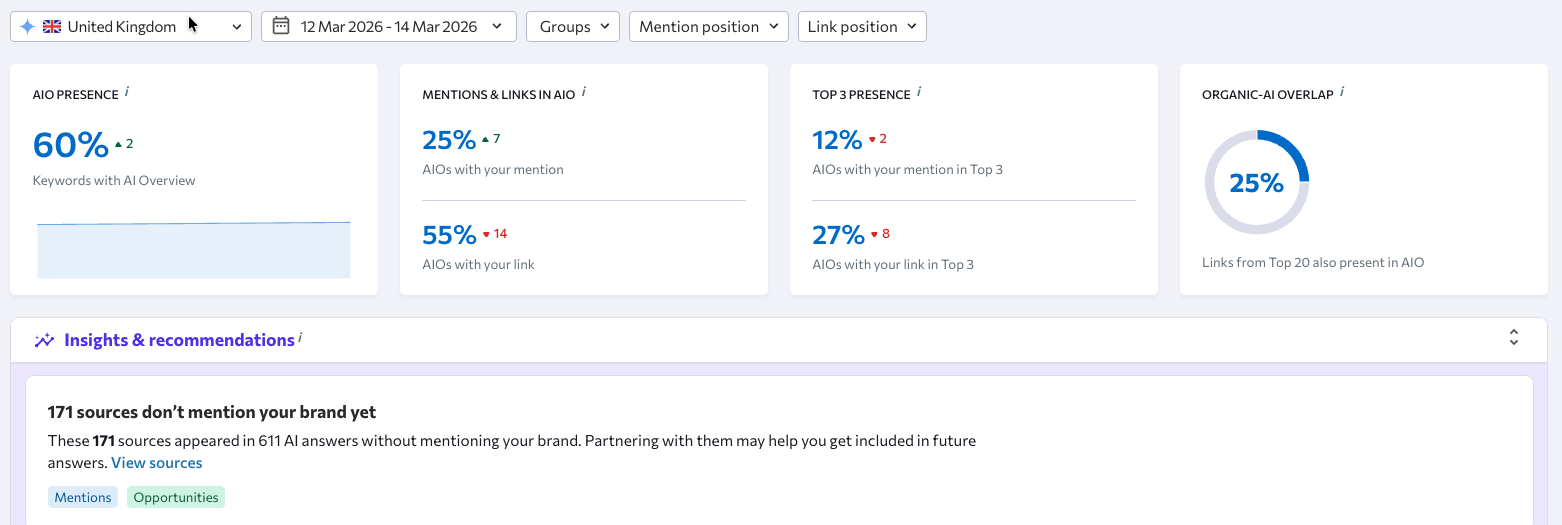
- Platforms like SE Ranking offer AI tracking tools that monitor AI Overview presence and citations automatically per keyword on a daily basis.
- Ahrefs can be used to audit which Page 1 keywords trigger AI Overviews and benchmark whether your domain is being cited.
Embracing total search optimisation
Total Search is our unified, platform-agnostic approach to search and discoverability. It recognises that people no longer rely on just Google to find answers, products, or inspiration. Today, users actively search across YouTube, TikTok, Reddit, Amazon, Instagram, app stores, forums and newsletters.
Rather than treating SEO as just rankings on Google, a modern ai seo strategy means showing up wherever your audience is actively searching or making decisions. Traditional SEO often misses the full picture because focusing only on Google leaves opportunity on the table. Most buying decisions are influenced before the click, meaning what users see, hear and read shapes their intent very early on.
To achieve a truly holistic presence, you should implement the following steps:
- Use a combination of platform-native tools, such as Google Search Console, YouTube Studio, and TikTok Insights.
- Leverage cross-platform research tools like SparkToro to uncover deep audience discovery insights.
- Ensure every single campaign is aligned to exactly how and where your audiences search.
Conclusion
Maintaining strong LLM visibility requires a bit of a shift in how you produce content (although I personally believe this shift is exaggerated at times). It is however important to move away from vanity content and towards true authority content. When you stop chasing keywords and start building authority, you naturally protect your brand against constant algorithm updates. This is the definitive path to dominating AI search queries.
If you are ready to future-proof your digital presence and improve your visibility, contact us today.