

The firm that helped make the MQL famous is now telling everyone to stop using it. Most B2B marketing teams haven’t caught up.
I ran a discovery call last week with a B2B platform. CEO in the room, Marketing Director, and our Head of Data. They walked us through their numbers.
Five hundred to a thousand leads a month. Eighty per cent classified as Marketing Qualified Leads. Seventy per cent of their paid budget through Meta. The lead engine had plateaued and customer acquisition costs (CAC) were rising. The marketing director said the line I hear in some version on most B2B calls.
“We want to pay more for higher quality leads and better conversion rates.”
Then our Head of Data, looking at the data flowing in, said a lot of their site traffic was “not really buyers.” Their words, not ours. If 80% of the leads coming through your engine are marketing-qualified, the qualification has stopped doing useful work. It is not a filter. It is a labelling exercise. And almost every B2B business I sit across from is running the same broken machine.
The most successful bad metric in B2B marketing
The MQL was invented by SiriusDecisions in 2002. The goal was sensible. Give sales and marketing a shared definition of a lead worth working. Twenty years later, almost every B2B marketing team uses some version of it. And almost every B2B marketing team I work with knows it doesn’t work.
The headline number tells you why. The typical MQL-to-customer conversion rate sits between 2% and 10% depending on price point, with enterprise B2B at the lower end. Forrester’s own data on a lead-centric process puts inquiry-to-closed-won at less than 1%. Less than one closed deal for every hundred people who raise their hand.
So we have a twenty-year-old metric where roughly 99% of the leads it qualifies will never become customers. We track it religiously. We hit quarterly targets on it. We celebrate an increased volume of it. And the people on both sides of the handoff know the number doesn’t matter.
This is the most successful bad metric in B2B marketing. Not because it works. Because everything else is built around it. If a metric consistently classifies large volumes of non-buyers as qualified demand, is it still functioning as a qualification system? Or has it become a productivity metric disguised as buyer intent?
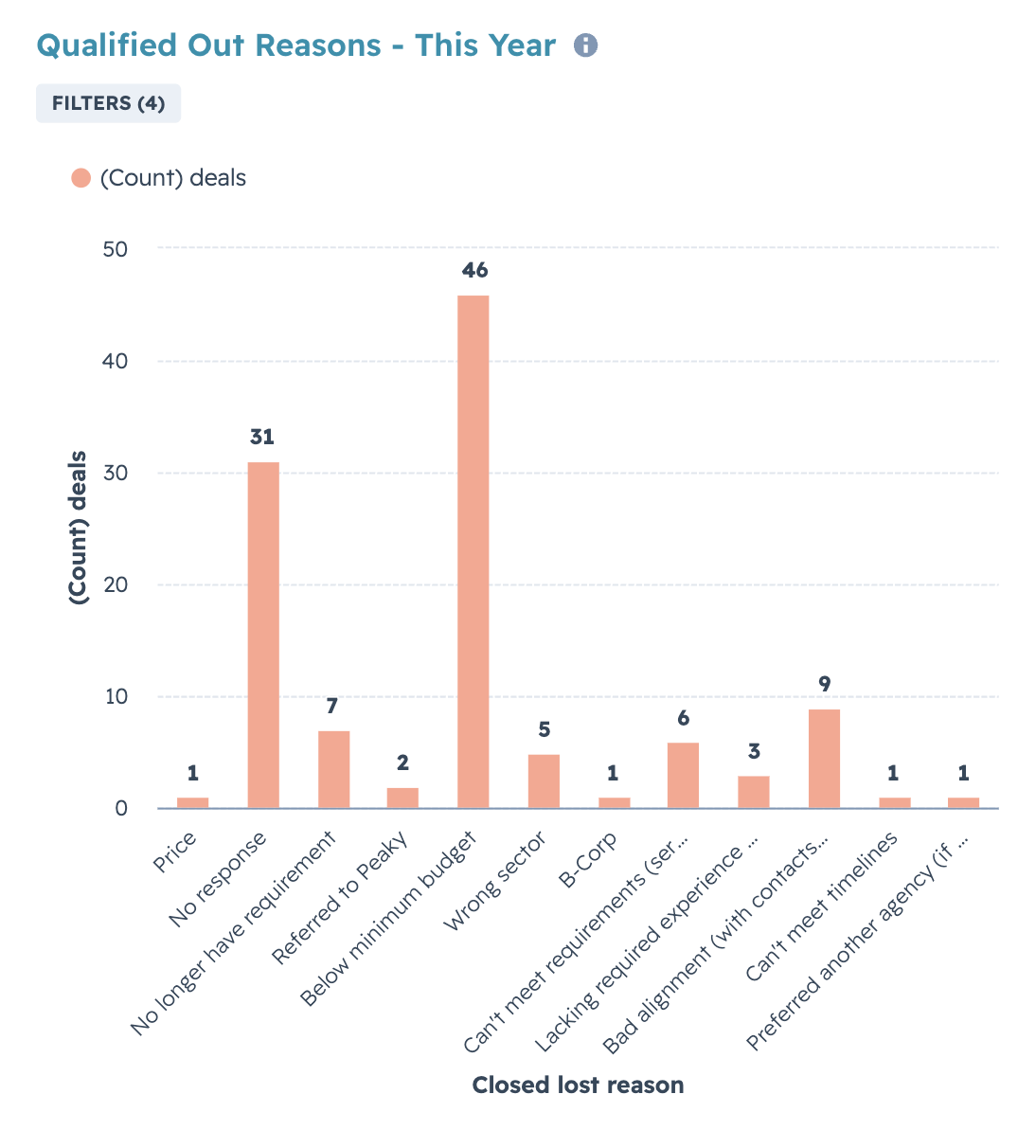
Snapshot of qualified out reasons between MQL and SQL
How the MQL eats strategy
Three structural reasons the MQL breaks the teams that use it. The first is the one nobody talks about.
- The MQL only sees half the buyers.
This is where the MQL problem gets bigger than lead quality. LinkedIn’s B2B Institute, working with Bain, published research recently that should have made every B2B marketer stop. Most B2B marketing is built to detect what they call Target Buyers. Product experts. The people who download whitepapers, attend webinars, click on ads, and leave a clear digital trail. The MQL machine can see them.
But Target Buyers are only half of a B2B buying group. The other half are Hidden Buyers. People in procurement, legal, finance and operations. Their job is not to evaluate the product. Their job is to evaluate the risk of buying it. They do not leave digital signals because their role does not require them to behave like product experts.
The LinkedIn and Bain research found that Hidden Buyers veto around half of all shortlisted vendors at the final stage. Not because the buyer prefers a competitor. Because the buying group cannot agree. Over 40% of B2B deals are abandoned for this reason, with the abandonment rate reaching 60% in some categories.
The MQL machine has been carefully built over twenty years to detect exactly half of the people who decide. The other half are invisible to it. And the invisible half kills more deals than the visible half ever close.
- It trains marketing to optimise for volume.
Boards set MQL targets quarterly. Marketing teams optimise to hit them. The fastest way to hit an MQL target is to lower the threshold. Within two years, “qualified” means “filled in a form.” Within three years, marketing teams are working with sources that everyone knows don’t convert, because the MQL number has become the proxy for marketing’s existence.
This is how a B2B platform ends up with 80% of its leads classified as marketing-qualified and a Head of Data describing the site traffic as not really buyers. The label has stopped describing a behaviour. It now just describes a count.
- It disguises pipeline problems for months.
By the time the MQL-to-customer ratio degrades enough to alarm the board, sales has been chasing leads that won’t close for two quarters. The leading indicator the metric was supposed to be has become a lagging indicator pretending to be a leading one. Sales teams are missing quota while marketing is still celebrating productivity on paper. Both things can be true. They describe a broken system.
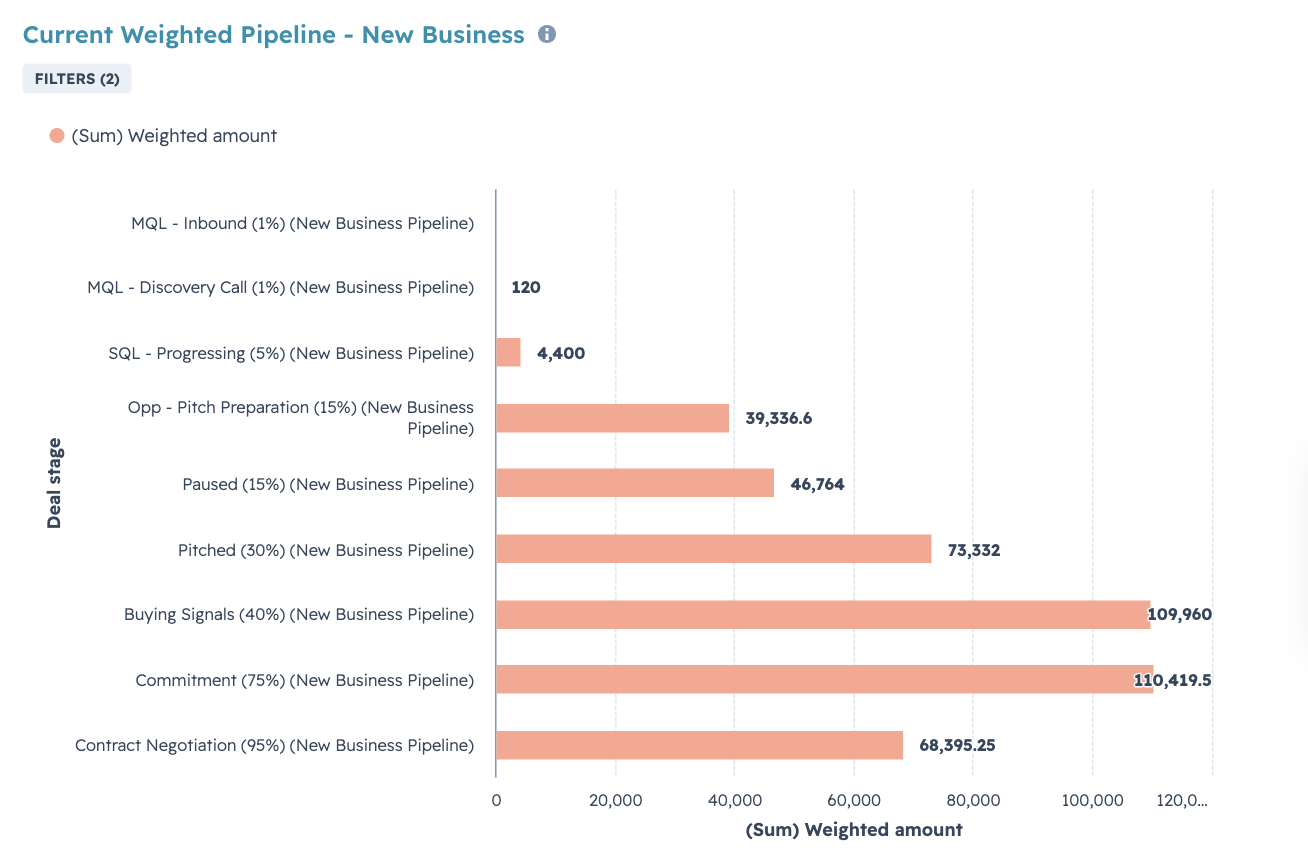
Weighted pipeline actually helps a company make informed decisions
The counter-argument is wrong
The strongest defence of the MQL is that the problem isn’t the metric, it’s how teams use it. Better scoring will fix it. Behavioural signals over demographic data. AI-driven prioritisation. Tighter sales-marketing alignment.
Every word of that is correct. None of it works at scale.
The reason it doesn’t work is that the MQL has been refined for twenty years. Lead scoring has gotten more sophisticated every year. First-party behavioural data has replaced demographic data on most platforms. AI prioritisation is now standard. Most benchmark studies still put MQL-to-SQL conversion in the low double digits. After twenty years of better data, better scoring and better platforms, the machine still rejects most of what it qualifies.
Refinement doesn’t help because the problem is structural, not operational. You cannot fix a metric that measures the wrong thing by measuring it more precisely. The MQL qualifies individuals. The decisions are made by groups. And the half of the group that vetoes the deal is the half the metric was never built to see.
This is why Forrester has been pushing B2B teams away from lead-centric measurement and towards opportunity-centric, buying-group-aware revenue processes. Its B2B Revenue Waterfall is built around pipeline and buying groups rather than individual leads. The fact that the firm most associated with the modern MQL is now telling teams to move past it should land harder than it has.
What to use instead
The replacement isn’t a better lead score. It’s three shifts in how marketing gets measured.
The first is to put marketing on a pipeline number. Marketing owns a revenue contribution, jointly with sales, measured in pounds rather than leads. The sales teams missing quota across B2B right now are not failing because of lead volume. They are failing because of lead quality and because the organisation measured the wrong thing for too long. Building a measurement framework that connects marketing to revenue puts both teams on the same scoreboard. Until that scoreboard exists, sales will keep chasing leads marketing never should have sent, and marketing will keep being measured on a number sales can’t use.
The second is to expand who marketing speaks to. The Hidden Buyers in procurement, legal, finance and operations are not reading your blog. They are not downloading your whitepaper. They will not appear in your MQL pipeline because they do not behave the way it is built to detect. They will, however, decide whether the deal happens. Marketing to them is a different job. It is about being known and trusted at the company level, not engaging an individual on a form. This is where brand investment, third-party credibility, peer reference and category leadership stop being soft marketing and become commercial necessity.
The third is to track velocity instead of volume. Quality of pipeline beats lead volume, and velocity tells you whether the work is landing in months, not quarters. How fast do qualified opportunities move from first conversation to closed-won? Volume tells you nothing useful once it has been gamed, which is almost always within the first eighteen months of using the metric.
The practical reality is messier than the framework suggests. Most B2B businesses cannot rip out the MQL overnight. The CRM is built around it. The board reports use it. The sales comp plan references it. So the move is gradual. Stop reporting MQL volume to the board. Report marketing-influenced pipeline. Keep the MQL inside the marketing team as an internal working metric. Drop it from the board conversation. That is the start, and everything else follows from getting that one change through.
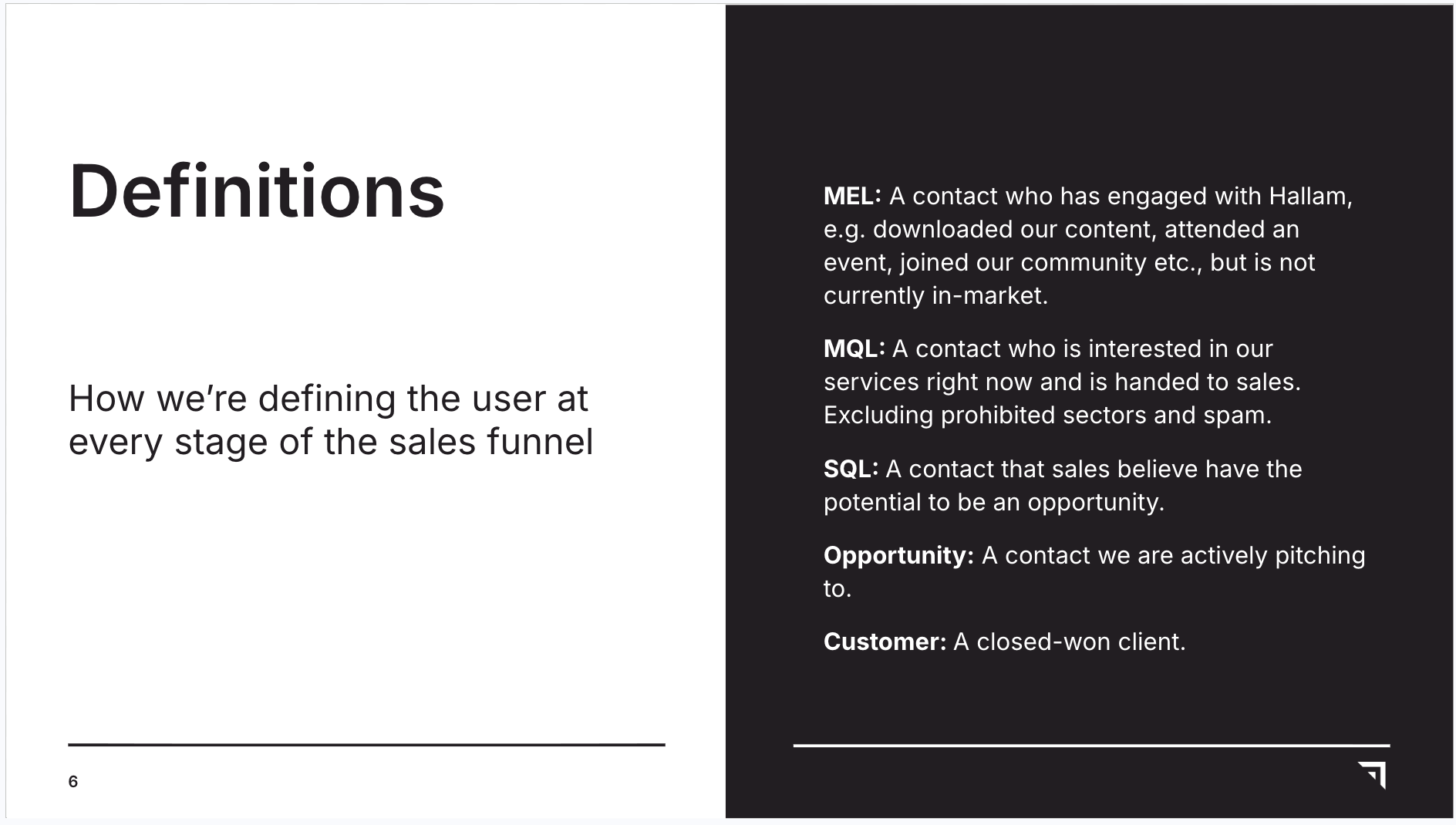
The point most marketers miss
The MQL doesn’t disappear because marketers stop believing in it. It disappears because the systems that depend on it get rebuilt.
That is a bigger task than this article can deliver. The CRM has to change. The sales comp plan has to change. The board report has to change. And the marketing team has to convince the rest of the business that the metric they have used for twenty years is the wrong thing to measure.
The Marketing Director on that discovery call last week didn’t need me to tell her the MQL was broken. She told me. She wanted to pay more for higher quality leads, by which she meant fewer leads that actually converted. The problem wasn’t her understanding. The problem was that the rest of her business hadn’t caught up.
The marketers who get this right in 2026 are the ones who stop arguing for better MQL scoring and start building the operational case for revenue accountability. That conversation is harder. It is also the only conversation that changes anything.
The MQL was a smart idea twenty years ago. It is a target now. And targets, once they become targets, stop being measurements. They become things to optimise. The MQL is being optimised against everywhere in B2B, and almost nowhere is it producing the thing it was meant to produce.
That is the conversation that changes how marketing gets measured.