

Answering one marketing question used to take an analyst around hours, with only 20% of that time spent on actual thinking. Conversational Analytics, built on the Hallam Brain, flips that ratio.
Every B2B marketing leader knows the feeling. Your CEO asks a simple question: is the brand spend working? The data to answer it exists. It is just spread across Google Analytics, your ad platforms, Search Console and your CRM, each with its own definitions, filters and export buttons.
At Hallam, we decided that was a problem worth solving properly. Not with another dashboard, but by letting you ask your data a question in plain English and get a reliable answer back.
Dashboards, dashboards everywhere (and still no answers)
Marketing teams have never had more data, or more dashboards. Yet answering a single, specific question still follows the same slow routine.
You find the right platform. You set the filters, dimensions and metrics correctly. You export a CSV, then repeat for every other source. Get one definition wrong and you start again. Even for an experienced analyst, it is lengthy work.
That is the real problem. Not that analysis is slow, but that almost none of the time goes on the part that matters: working out what the numbers mean and what to do next.
The hardest part is pulling from multiple places at once. GA4 says one thing, your ad platform another, your CRM a third. It is why the industry is obsessed with a “single source of truth”.
What Conversational Analytics does
Conversational Analytics lets marketers ask questions about their numbers in plain English, instead of digging through dashboards or waiting on an analyst.
It covers the data B2B marketers actually use: GA4, Google Search Console, the major ad platforms (Google, Microsoft, LinkedIn and Meta) and CRM data. You ask through a simple chat interface, or directly from Claude via MCP, so it fits into the AI tools teams already work in.
Ask which channels are driving opportunities, not just clicks. Ask why paid and organic numbers disagree. Ask how impressions turn into pipeline. The answer comes back in seconds, not after half a day of exports.
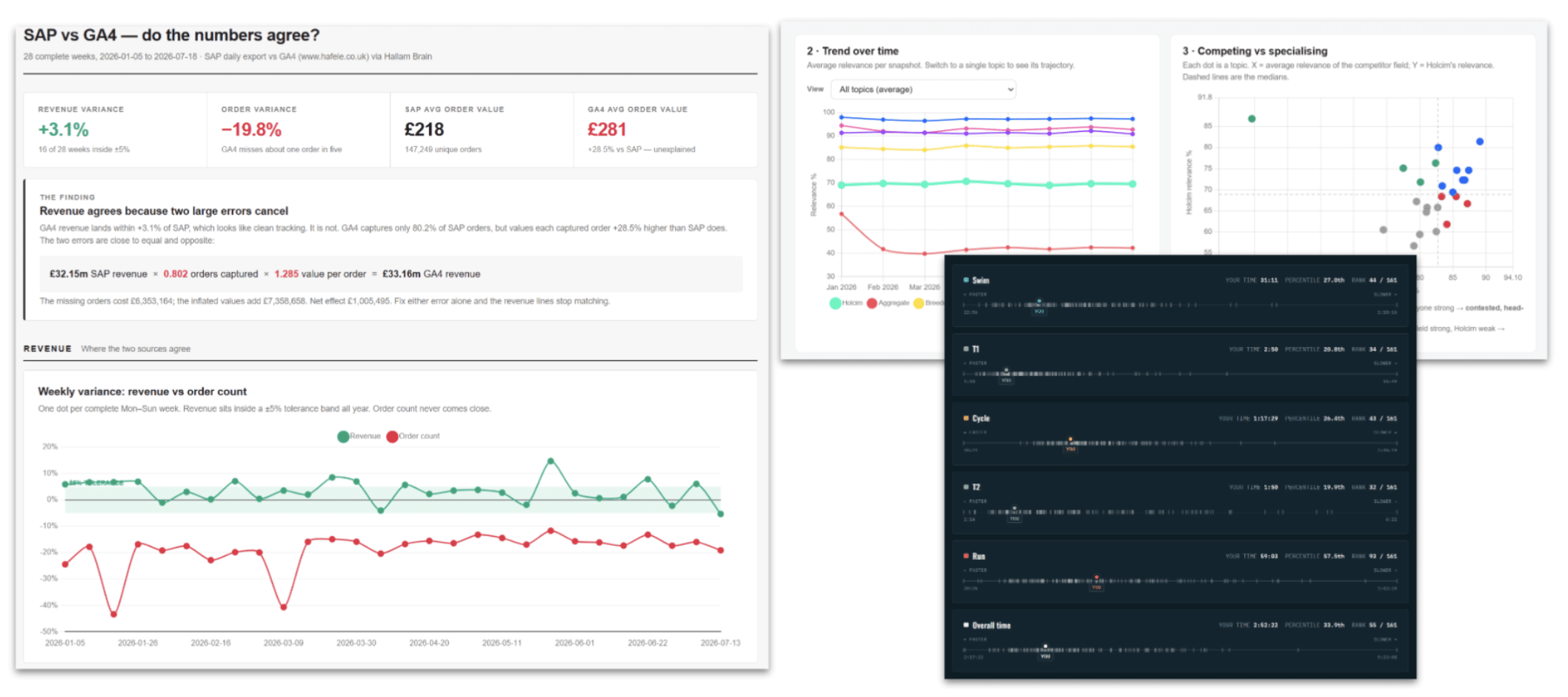
When you need something more polished, the same data can still be built into full HTML dashboards, with complete freedom over how they look.
Built on the Hallam Brain
Plenty of tools now promise to “chat with your data”. Most bolt a chatbot onto a single platform. We started somewhere harder: the data itself.
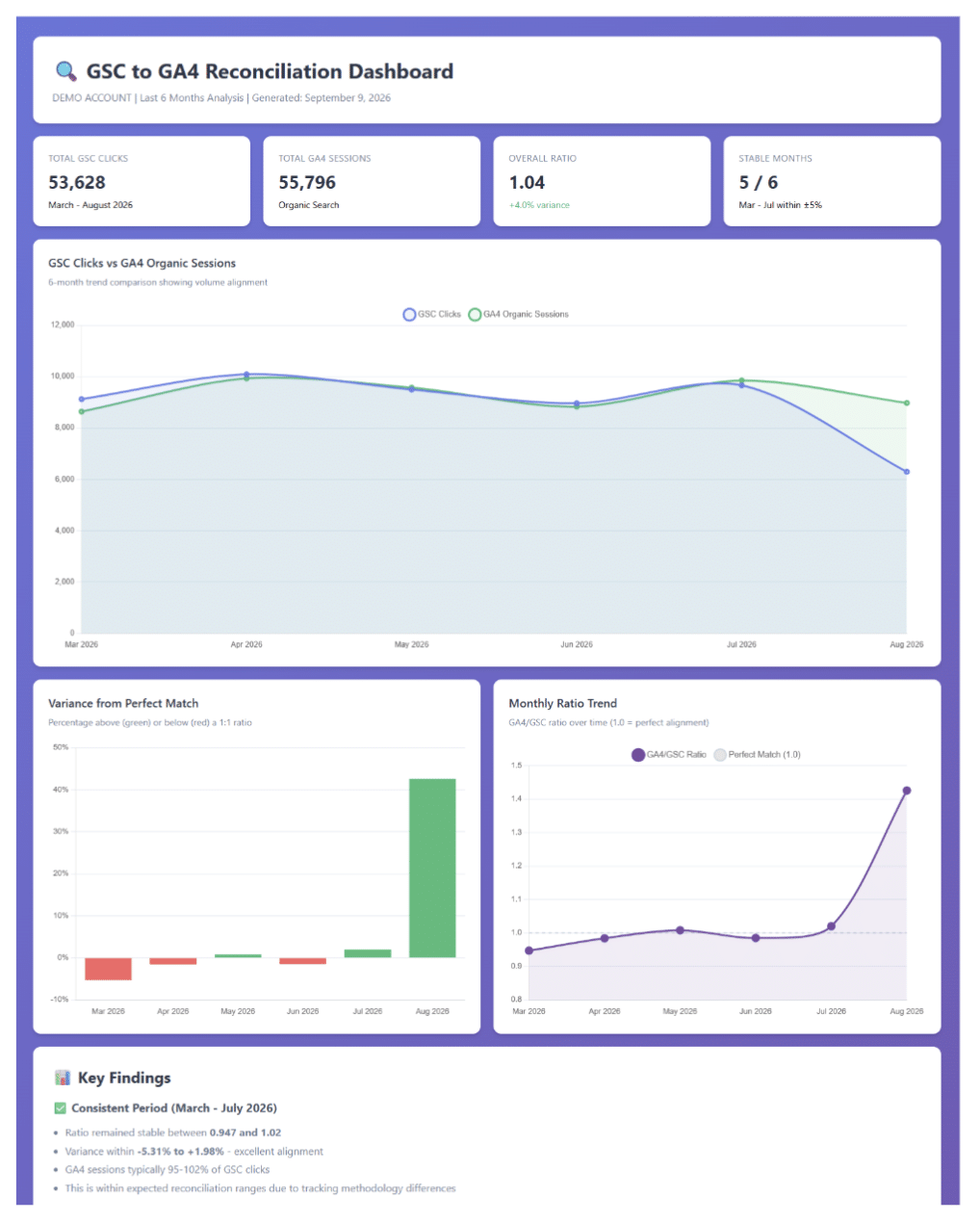
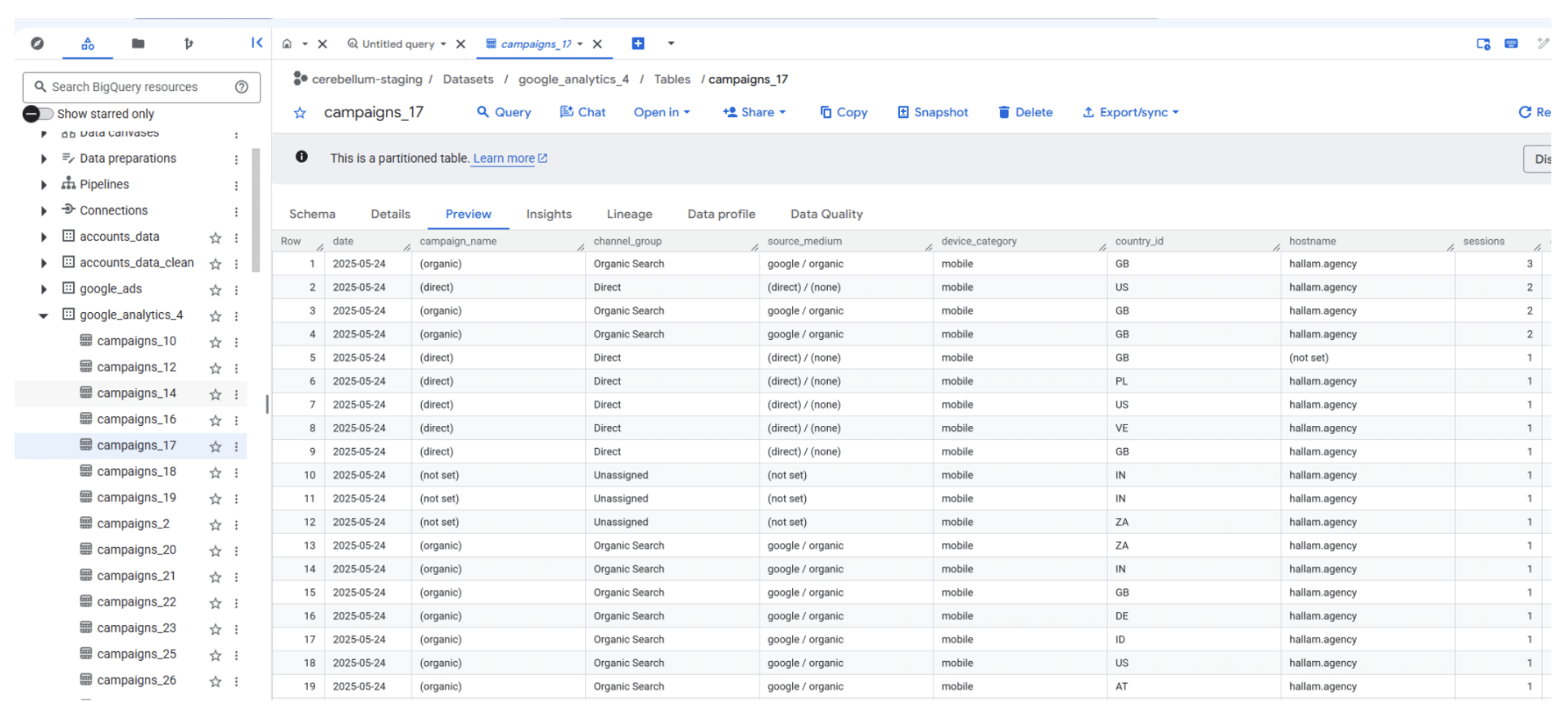
Step one was building a data warehouse for our clients’ performance data, the Hallam Brain. Every source flows into one central pipeline. Then comes the work most people skip: a semantic layer that turns raw platform data into a database an AI can actually use reliably.
The point is not that every platform suddenly agrees. They never will. The point is that you can see and question all of them at once, side by side.
We built it to solve our own problems first. Our data team has used the Brain internally to:
- Check discrepancies between platforms
- Answer quick questions from colleagues in minutes
- Produce audits
- Build full-funnel progression views, from impressions through to opportunities
- Correlate brand spend with improvements in traffic
That is how we work at Hallam. We use technology to solve real marketing problems, then turn those solutions into tools for our clients.
Let AI do the labour, not the thinking
With the Brain in place, the same question that used to take hours drastically decreases. AI handles the build and the thinking time doubles, still taking less time overall.
As our Head of Data & Insights, Jonathan, puts it, you are not really trying to answer questions faster. You are trying to answer them better, and now you have the time to.
Cheap iteration changes the quality of the answer, too. In one reconciliation for a client, the first pass looked fine because total revenue matched closely. Pushed to dig further, the analysis uncovered an order inflation issue hiding underneath. Crunching alone in a spreadsheet, it would have been easy to see the totals match and move on.
No more “that’s the best answer we had time for”. Spot a missing data source, add it. Think of another factor, test it. Something looks off, check it.
What it means for B2B marketing teams
For our clients, the benefit is simple: easier for you, more focus on the work for us, and more thinking time for everyone.
Marketing leaders can answer their own questions when the board asks them, without waiting for a monthly report. Our specialists spend less time pulling numbers and more time on strategy. And conversations between us shift from “what happened?” to “what should we do about it?”
But remember, AI does not replace judgement. The hard part is no longer running the analysis. It is knowing which analysis is useful right now. That is why we pair the tool with people who understand B2B marketing, rather than handing over a chatbot and walking away.
Where we are now
We first showcased Conversational Analytics publicly in September during Jonathan’s session at the Hallam x Google AI Summit, then again at Better B2B South in London.
The initial build is complete, and Conversational Analytics is now in limited closed beta with a select group of Hallam clients. We are deliberately taking it one step at a time. Analytics tools handle sensitive data, so getting security and infrastructure right matters more to us than moving fast.
Once the beta has proved itself, we will expand access in due course. Beyond that, we are already exploring what comes next, including bringing in third-party data sources and richer context, so the answers get sharper over time.

Help us shape what comes next
We are looking for B2B marketers who want to help test the future of marketing analytics. The beta is limited for now, but you can join the waitlist here and we will be in touch as access expands.