

B2B buying has never been more complex.
Buying committees are larger, sales cycles are longer and prospects complete much of their research before they ever speak to a salesperson. While organic search and content marketing remain essential, Google Ads for B2B continues to be one of the fastest ways to put your business in front of buyers with genuine commercial intent.
Success, however, rarely comes from applying B2C tactics to a B2B account.
A search for “CRM software for manufacturing companies” has very different intent from someone looking to buy trainers online. One might lead to a six-month procurement process involving finance, IT and operations. The other could result in a purchase within minutes.
That difference should shape every part of your paid media strategy, from keyword selection to bidding, audience targeting and measurement.
In this guide, I’ll cover the B2B Google Ads strategies we’ve found to be most effective for generating qualified leads, supporting sales teams and demonstrating commercial impact.
Why Google Ads for B2B is different from B2C
Although the Google Ads platform is the same, the objectives behind Google Ads B2B campaigns are usually very different.
In ecommerce, success is often measured by immediate purchases and return on ad spend.
In B2B, success is more likely to be measured by:
- Marketing Qualified Leads (MQLs)
- Sales Qualified Leads (SQLs)
- Opportunities created
- Pipeline value
- Closed revenue
- Customer lifetime value
Clicks alone rarely tell the full story.
Longer buying journeys require patience
One of the biggest mistakes I see is judging campaigns too quickly.
Many B2B businesses expect leads to convert within days, when the reality is that enterprise sales cycles often last several months. Prospects may download a guide, attend a webinar and speak to multiple stakeholders before requesting a proposal.
That means your campaigns need to support buyers throughout the research process, not just at the point of purchase.
Lead quality matters more than lead volume
Generating hundreds of enquiries is meaningless if none are suitable.
I’ve worked with accounts where reducing lead volume actually increased sales because tighter targeting eliminated low-value enquiries.
A successful B2B PPC strategy should prioritise quality over quantity.
Key takeaway: Measure campaigns against pipeline and revenue, not just conversions inside Google Ads.
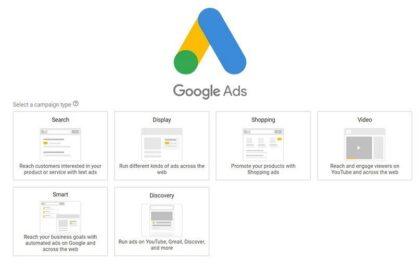
Campaign types for B2B: Search, Display and Demand Gen
No single campaign type fits every business. The strongest accounts usually combine several formats that support different stages of the buying journey.
Search campaigns
Search remains the foundation of most successful B2B paid search strategies.
People that are actively searching for your high intent keywords, like SaaS solutions, consultancy, transformation partners, CRM services for instance, have already demonstrated intent.
Prioritise Search when your goal is demand capture. Focus on:
- Commercial intent keywords
- Strong ad relevance
- Useful landing pages
- Clear conversion paths
Display campaigns
Display campaigns are often dismissed in B2B because they produce fewer direct conversions. Used correctly, they can be highly effective for:
- Remarketing
- Brand awareness
- Re-engaging previous visitors
- Supporting longer buying journeys
Rather than expecting Display to generate immediate enquiries, view it as a way to stay visible while prospects continue researching.
Demand Gen campaigns
Demand Gen has become a valuable addition for B2B advertisers looking to reach decision makers across YouTube, Discover and Gmail ad placements.
Creative becomes much more important here.
Instead of product-led messaging, think about:
- Industry challenges
- Research reports
- Customer success stories
- Educational content
This helps build familiarity before prospects begin actively searching.
Key takeaway: Search captures existing demand. Display and Demand Gen help create and nurture it.
B2B keyword strategy for paid search
Keyword strategy is where many B2B accounts succeed or fail. The temptation is to target broad, high-volume keywords. Instead, focus on commercial intent.
Prioritise high-intent searches
Compare these examples.
Higher intent:
- CRM implementation partner
- Microsoft Dynamics consultancy
- HR software demo
- Manufacturing ERP provider
Lower intent:
- What is CRM
- ERP definition
- HR software examples
The search volume may be lower, but the commercial intent is significantly stronger.
Build tightly themed ad groups
Closely related keywords allow you to:
- Write more relevant ads
- Improve Quality Score
- Increase click-through rate
- Reduce wasted spend
Avoid large ad groups containing dozens of unrelated terms.
Don’t overlook negative keywords
Negative keywords are one of the simplest ways to improve performance. For example:
- Jobs
- Salary
- Free
- Course
- Template
- Meaning
- Wikipedia
Removing irrelevant traffic often produces immediate efficiency gains.
Balance broad match carefully
Broad match has improved thanks to Google’s machine learning. However, it works best when:
- Conversion tracking is accurate
- Audience signals are strong
- Smart bidding has enough data
For newer accounts, phrase and exact match still provide greater control.
Key takeaway: Successful B2B keyword strategies prioritise buying intent rather than search volume.
Targeting options for long B2B sales cycles
Not every prospect converts during their first visit. That’s why audience strategy matters.
Remarketing remains essential
Visitors who have already engaged with your business are usually your strongest audience. Segment remarketing lists based on behaviour, such as:
- Product page visitors
- Pricing page visitors
- Webinar attendees
- Whitepaper downloads
Each audience should receive messaging relevant to their stage of consideration.
Use first-party data
First-party audiences have become increasingly valuable. Upload customer lists where appropriate and build audiences using:
- Existing customers
- Opportunities
- Newsletter subscribers
- CRM segments
This helps Google identify similar prospects while maintaining privacy standards.
Layer audience signals
Rather than replacing keywords, audiences should strengthen them.
For example, someone searching for enterprise accounting software who also belongs to an in-market technology audience represents a stronger opportunity than search intent alone.
Bidding strategies that work for B2B
Choosing the right bidding strategy depends on campaign maturity and the volume of data in your Google Ads account.
Start with reliable conversion data
Before adopting automated bidding, ensure:
- Conversion tracking is accurate
- Offline conversions are imported
- Lead quality is measured
Without reliable data, automation optimises towards the wrong outcomes.
Maximise Conversions
This aims to achieve what it says on the tin! Get the most amount of conversions possible within your budget, conversion set up is essential for this bidding strategy to succeed.
Suitable when:
- Building conversion volume
- Launching new campaigns
- Growing lead generation
Target CPA
Works well once campaigns have accumulated sufficient conversion history.
Review target CPA regularly to ensure it reflects commercial reality rather than simply reducing costs.
Personal recommendation: I rarely launch campaigns directly into a Target CPA bidding strategy, they perform best when they already have a solid conversion data foundation from previously running on Max Clicks or Max conversions. When upgrading you should have a good idea of the CPA your campaign is capable of achieving to help you set the target CPA, if in doubt work backwards from your goals, i.e. if you need 10 leads per month and you know your CPA is usually £100, you need a budget of at least £1,000 to achieve it.
Target ROAS
Less common in lead generation but useful where revenue data is imported into Google Ads.
This allows bidding decisions to optimise towards actual revenue or LTV instead of lead volume alone.
This tactic can also be used if you’re measuring multiple conversion actions with different weights of importance. You can assign arbitrary, yet calculated values to different conversion actions to signal to Google which conversion actions should be prioritised.
For instance, a brochure download may be easy to achieve, so will have a higher conversion rate in Google Ads at 10%, but users that download a brochure may only move from a lead to an MQL at a 0.5% rate, they’ll still be researching and require educating to move through your funnel.
However, a demo request may have a much lower conversion rate in Google Ads at 1%, but users that do so may move from a lead to an MQL much faster at a 25% rate, they’re primed to choose their partner and ready to exit their buying journey.
In this scenario you still want both conversion actions, they both signal strong intent and a high value click. But if you record brochure downloads with a £50 value and demo requests at a £200 value, Google knows which action brings you the highest and quickest return, and Target ROAS as a bidding strategy will educate the machine learning to strive for that efficiency without disregarding either conversion actions contribution.
Maximise Clicks
A good option when you don’t have enough conversion data to support Target CPA/ROAS & Max Conversions.
Or for targeting keywords with exceptionally low search volume.
Sometimes is the safest option for controlling your CPCs, especially in young accounts.
Key takeaway: Automation performs best when supported by high-quality conversion data.
Conversion tracking for B2B in Google Ads
If there’s one area I’d encourage every B2B advertiser to improve, it’s measurement.
Too many businesses still optimise towards form submissions alone. That rarely reflects commercial success.

Measure every meaningful conversion
Track actions such as:
- Contact forms
- Phone calls
- Demo requests
- Whitepaper downloads
- Webinar registrations
Not every conversion has equal value, make sure to represent that within the ad platforms. Phone calls, for instance, likely have a stronger MQL -> SQL conversion rate than brochure requests do, but if you aren’t sharing that data with your ad platform, it will treat both conversion actions with the same importance. This will lead to the ‘easier’ or more frequently achieved conversion action being prioritised over the more valuable conversion action when using bidding strategies like Max Conversions.
Assign different values to conversion actions where appropriate.
Import offline conversions
Offline conversion imports allow Google Ads to understand which leads become:
- Qualified opportunities
- Sales
- Revenue
This significantly improves smart bidding performance.
Connect CRM data
Whether you’re using HubSpot, Salesforce or Microsoft Dynamics, CRM integration provides a much clearer picture of campaign performance.
Instead of celebrating cheap leads, you’ll understand which campaigns generate profitable customers.
Key takeaway: Pipeline data is considerably more valuable than lead volume alone.
B2B Google Ads benchmarks and what good looks like
One of the most common questions clients ask is: “What should our Google Ads performance look like?”
The honest answer is that benchmarks vary significantly between industries. Highly competitive sectors such as legal services or SaaS often see much higher cost per clicks than manufacturing or niche professional services.
Rather than chasing industry averages, monitor trends including:
- Click-through rate
- Cost per click
- Conversion rate
- Cost per qualified lead
- Opportunity creation rate
- Cost per opportunity
- Pipeline generated
- Revenue influenced
These metrics provide a far more meaningful view of campaign performance than clicks or impressions alone.
Most importantly, benchmark against your own historical performance.
Consistent improvements in lead quality, conversion rates and pipeline contribution usually matter far more than outperforming industry averages.
Final thoughts
Google Ads continues to be one of the most effective channels for B2B lead generation, but success requires more than simply launching campaigns and increasing budgets.
The strongest Google Ads for B2B strategies combine:
- Commercial intent keyword targeting
- Audience-first campaign planning
- Accurate conversion tracking
- CRM integration
- Smart bidding supported by quality data
- Ongoing testing and optimisation
As privacy continues to evolve and automation becomes more sophisticated, businesses with clean data and a clear measurement framework will be best placed to outperform competitors.
Ultimately, great B2B Google Ads campaigns don’t just generate more leads. They generate better opportunities, stronger pipeline and measurable business growth.
If you’re interested in discussing your B2B Google Ads strategy, reach out to our experts, they’d love to chat about it with you!