
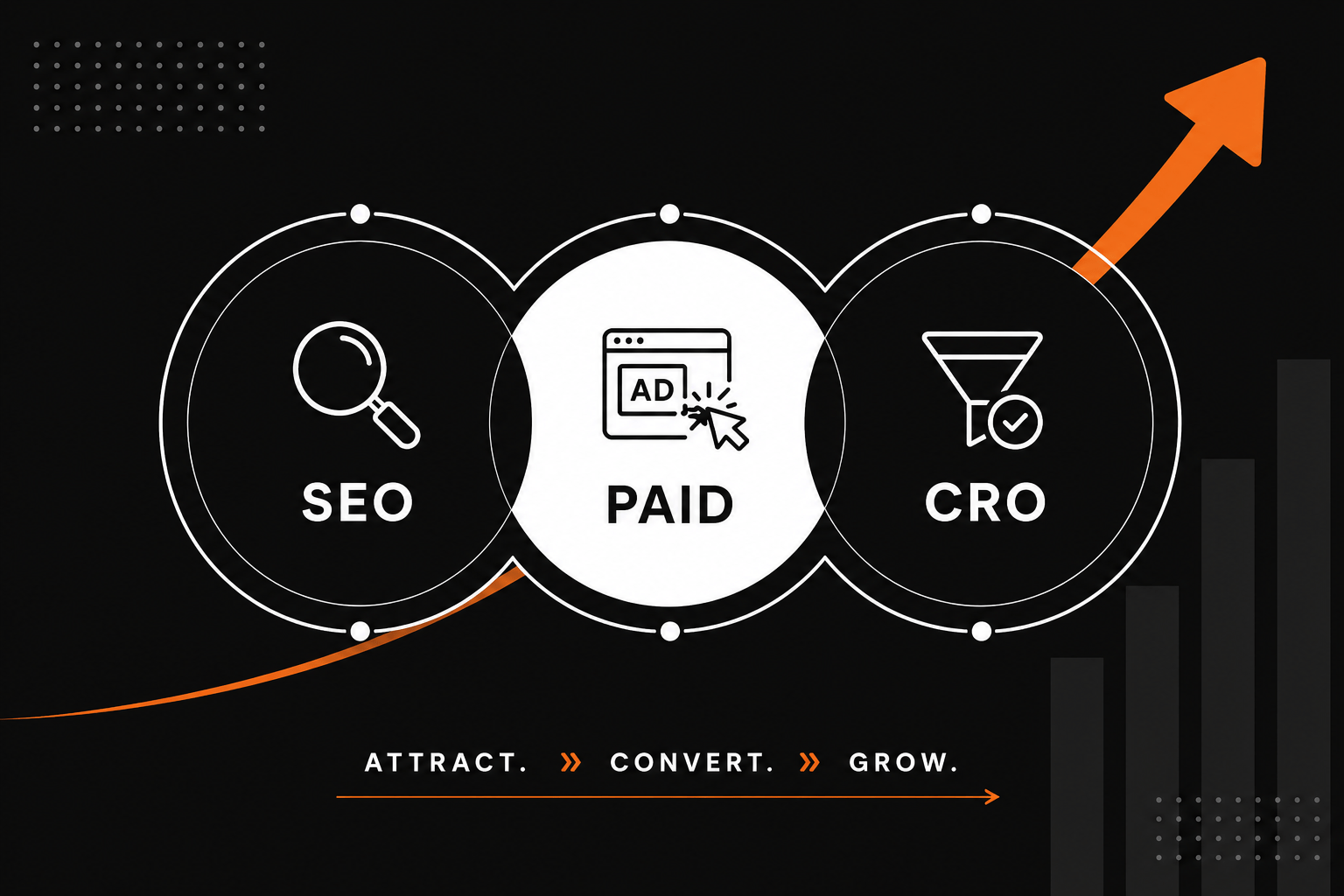
Most B2B brands run SEO, paid media and conversion rate optimisation (CRO) as three separate work streams. That’s a mistake.
When these channels don’t talk to each other, you end up with a fragmented approach: wasted budget, mismatched messaging and a pipeline that doesn’t convert.
In this blog, we will explore:
- Why aligning SEO, paid and CRO matters
- How SEO and PPC still work together
- CRO is highly underestimated
- How to bring the three streams together
Why aligning SEO, paid and CRO matters
B2B buying decisions are messy. They involve multiple stakeholders and drawn-out research cycles.
According to Gartner, customers spend a mere 17% of their total buying time meeting with potential suppliers. The rest is spent on independent research.
If your organic presence, paid ads and website pages aren’t backing each other up at every turn, you simply become invisible.
Misalignment doesn’t just cost clicks, it costs revenue. Without a coherent strategy connecting how you get found, how you spend and how you convert, you’re essentially running isolated campaigns that happen to share a budget.
SEO and PPC still work better together
If you’ve worked in marketing for more than five minutes, you’ve heard the phrase “SEO and PPC work better together.” It was true when search was simple and it’s even more critical now.
The fundamental case comes down to incrementality. Google’s own internal data, widely cited in the industry, suggests that brands running paid search alongside strong organic rankings capture roughly 50% more clicks than relying on organic alone. The channels don’t replace one another, they multiply your impact.
This is particularly true for B2B companies targeting multiple industries. A single page rarely ranks organically for every industry-specific variation of a target keyword. Paid fills the gaps where organic falls short, while your organic positions lend credibility to the queries your paid ads are winning.
Now layer in AI and the stakes get higher. Data from SparkToro shows that 59.7% of searches in Europe now end without a click, as zero-click results and AI-generated answers increasingly satisfy queries on the results page. That means organic traffic alone is becoming an even less reliable source. Paid search is increasingly one of the few guaranteed ways to stay visible for the queries that matter most.
Your brand now needs to appear across AI Overviews, paid results and organic listings simultaneously. More areas to coordinate, not less. The B2B brands winning right now aren’t treating SEO and PPC as separate things. They’re running them as a single, unified visibility strategy.
For a deeper look at how AI is reshaping search visibility, see our guide to AI search.
CRO is highly underestimated
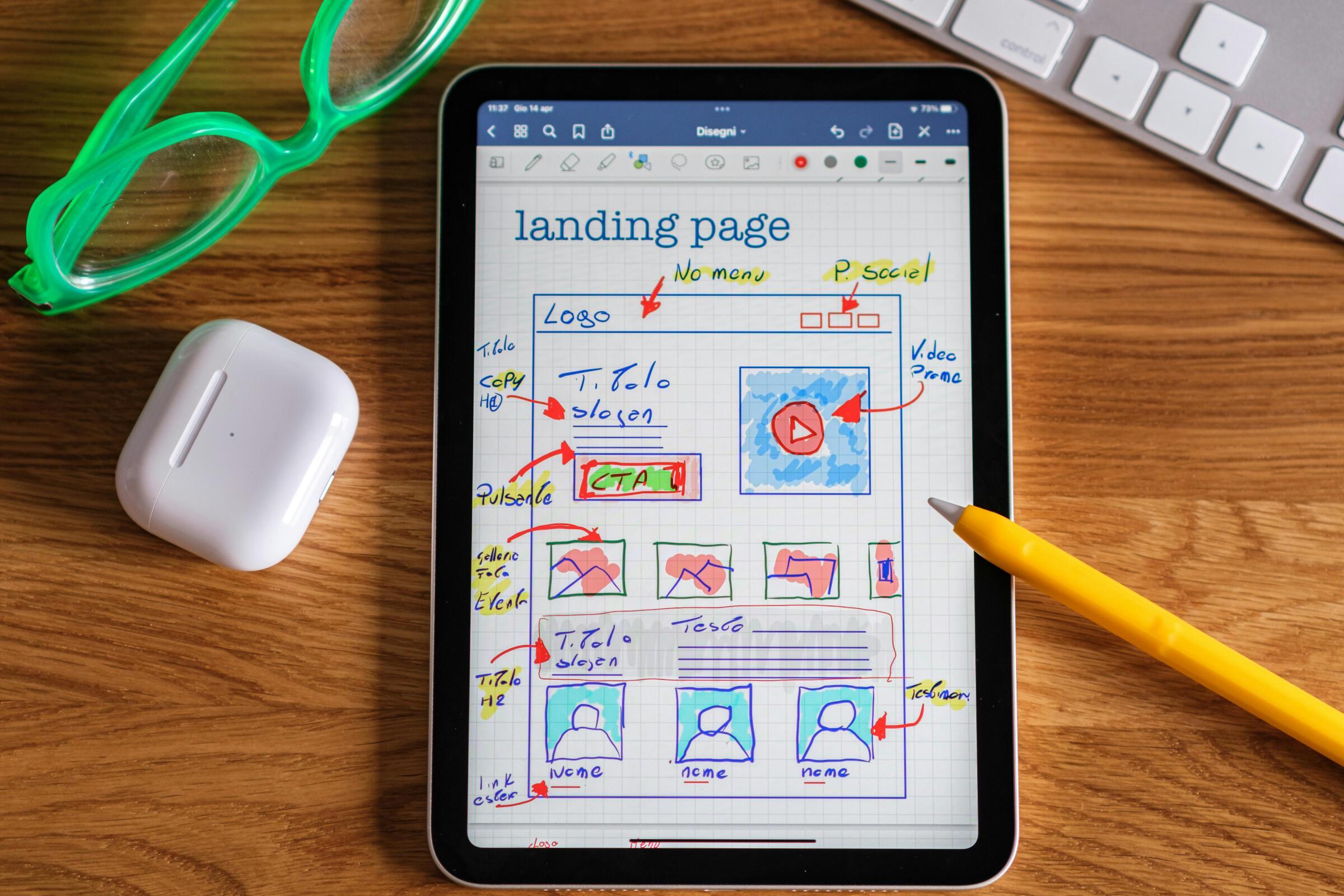
For years, B2B paid search followed a predictable recipe: run an ad, push traffic to a stripped-back landing page, then collect a form fill. That worked fine a decade ago.
Today, it’s a brilliant way to burn your marketing budget.
The buying journey has shifted. Gartner’s research on the modern B2B buying process indicates that purchase decisions now involve six to ten stakeholders.
Buyers spend the bulk of their time conducting independent research before ever speaking to a sales team. Sending a research-driven buyer to a barren landing page with zero navigation, no content depth and minimal proof points is a total mismatch for their intent.
Think about the modern buyer’s journey. They look at your brand on LinkedIn, read third-party reviews, ask peers in industry communities and check whether you pop up in AI-generated recommendations. They do all of this before they ever consider filling out a form.
A smarter approach is to optimise the high-value pages that already exist on your primary website (the ones ranking organically, answering real customer pain points and building actual trust). Drive your paid traffic there. Instead of asking someone to convert completely cold, you bring them into a rich digital environment that proves your credibility and lets them gather details at their own pace.
Dedicated landing pages still have a purpose, but it’s a specific one. Bottom-of-funnel terms, direct competitor comparisons, or explicit promotional offers are times when a distraction-free page makes perfect sense. Outside of those exact scenarios, you are almost always better off investing in making your existing website pages convert better.
How to bring SEO, paid and CRO together
Aligning these three channels doesn’t require a total marketing overhaul.
Here’s a straightforward sequence:
- Start with real buyer intent: What are they actually searching for? Does your website answer those questions clearly and credibly?
- Look at AI discovery: Are you appearing in answers when buyers ask tools like ChatGPT, Gemini, or Perplexity? We’ve seen this firsthand. One B2B client specialising in enterprise architecture began actively contributing helpful, expert insights to specific industry communities. Their AI citation visibility improved measurably, translating into a 20% increase in branded searches within a few months. That’s organic visibility you can’t buy.
- Optimise the landing experience: Once you know the queries that matter, build or refine the web pages answering them. Ensure each page serves both organic and paid traffic by featuring clear calls to action, deep proof points and visible trust signals.
- Amplify with paid media: Run paid search ads to those exact pages for your highest-intent keywords. You are now using paid budget to back up pages that already carry organic weight, rather than asking an isolated landing page to do all the heavy lifting.
- Layer in paid social: Use social channels to distribute thought-leadership pieces that address these core queries. Move away from endless bottom-of-funnel conversion ads and focus on content that builds familiarity over time. LinkedIn is an obvious choice, but don’t ignore niche forums, industry Slack groups, or Reddit threads where your buyers actually hang out. Get involved, answer questions and earn a spot in the conversation.
The exact mix will change based on your industry and deal complexity. A brand selling enterprise software with an 18-month sales cycle may require a different approach to a business selling professional services with a two-week turnaround.
But the core logic remains identical: Find what your buyers are looking for, build the best possible answer and use organic, paid, and social channels to make sure they see it.
The takeaway
A joined-up digital strategy is no longer an optional luxury for B2B brands; it is the baseline for staying competitive.
The companies seeing the highest return on their marketing investments are those treating SEO, paid media and CRO as interconnected levers within a single growth strategy.
It’s time to take a hard look at your current setup:
- Are your SEO and paid media teams actively sharing keyword data and conversion insights?
- Are you driving paid traffic to pages inherently optimised for user experience, or to standalone landing pages built in complete isolation?
- Are you highly visible on the channels where your buyers actually conduct research (including AI tools and social networks), or just where you’ve always bought ad space?
If those questions bring silence to the boardroom, you have your starting point.
Pull your SEO, paid and CRO teams into the same room, map the gaps, then start connecting the dots.
That’s where the growth is.
Looking for an integrated approach? Get in touch.