Thought leadership ads are an excellent way for B2B businesses to boost engagement and grow trust, and we’re going to uncover how you can master the art of them.
What are LinkedIn thought leadership ads?
Thought leadership ads allow companies to sponsor posts from individual LinkedIn users, usually employees, customers, or subject-matter experts. By sponsoring the post, the ad seems native to others’ LinkedIn feeds.
Instead of using the normal company tone of voice, structure and sales tactics, you’re promoting a real person’s voice and opinion, and generating more trust for your brand, because as we all know: people trust people.
The ad type was launched in 2023, and if you’re looking to humanise your brand, share real expertise and generate authentic engagement, without pushing for a hard sell, you’re going to want to read on.
Unlike traditional company-page ads, thought leadership ads allow businesses to amplify the expertise and perspectives of individuals. This gives B2B brands an opportunity to build credibility through the people behind their business, while reaching a wider audience than organic posts alone might achieve.
Why LinkedIn thought leadership ads work better than you might think
Today, advertising is all about ‘stopping the scroll’, and it’s becoming increasingly challenging for brands to capture users’ attention. But posts from individuals; especially those with strong opinions, useful tips and industry insights, are what users actually go on LinkedIn to see.
Here’s where you can expect your thought leadership ads to excel:
- Engagement: Personal perspectives, useful advice and relevant industry commentary can give audiences a reason to stop scrolling and interact.
- Brand awareness: Sponsoring credible voices can help your business reach relevant audiences beyond an author’s existing network.
- Trust and consideration: Sharing genuine expertise can help prospective buyers become familiar with your brand before they’re ready to purchase.
- Reaching decision-makers: Target relevant job roles, seniority levels, industries and accounts with content that addresses the challenges those audiences actually face.
There’s encouraging evidence behind the format, too. LinkedIn reported that Thought Leader Ads achieved up to 2.4 times higher click-through rates than single-image ads running towards the same objective in its July–September 2025 internal data.
This is a useful indication of the format’s potential, rather than a guarantee of results. Performance will depend on the creative, audience, campaign objective and measurement approach.
The key is to remember that engagement is a starting point, not the end goal. For B2B brands with longer sales cycles, the opportunity is to build familiarity and credibility early, then use relevant content and follow-up campaigns to move interested audiences towards meaningful action.
How to smash your thought leadership ad content
Truthfully, this is the hardest part of a thought leadership ad strategy, it will only work if the content is truly worth amplifying, we’re looking for insight, relevance and authenticity. Let’s go through some tried and tested strategies for success:
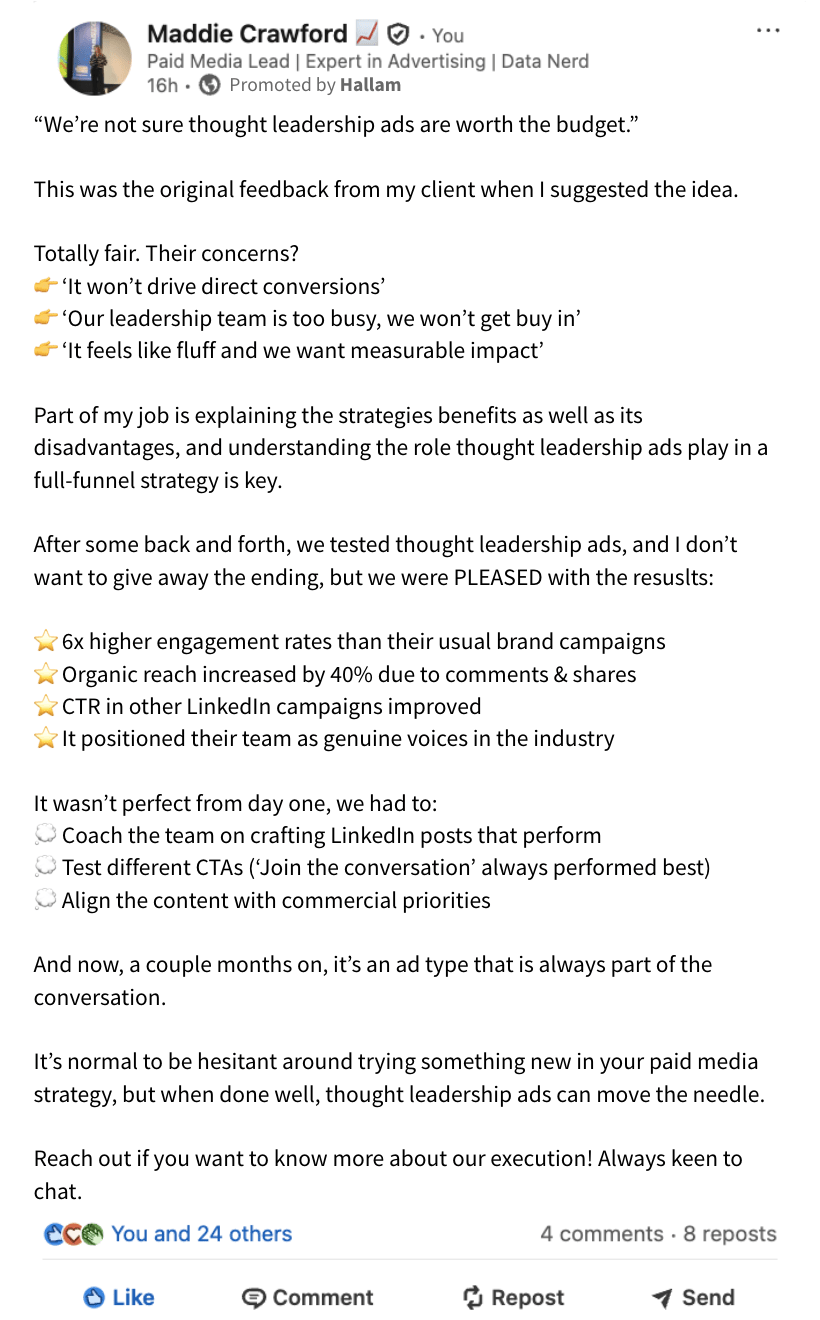
Case studies and wins
It’s giving: ‘the proof is in the pudding’. In this scenario your team should be talking about the work, sharing behind the scenes context, lessons learned, and outcomes.
If we were going to do this at Hallam it could look like this:
Answering the questions that always crop up
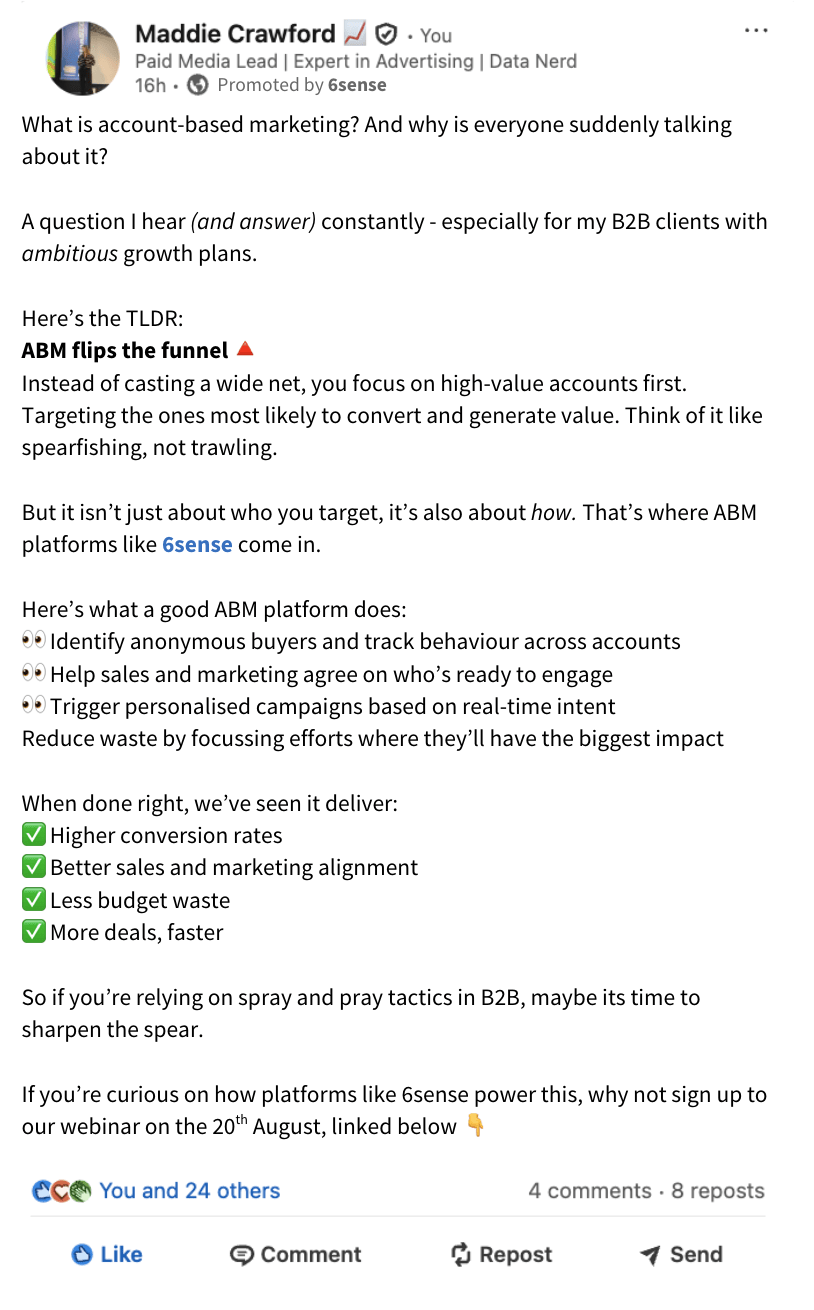
FAQs exist on most websites for a reason (the reason is primarily for SEO purposes not PPC), but, as it already exists – let’s amplify it!
Here’s how platforms like 6sense could do it to build trust among their pipeline & drive webinar signups, plus the fact that they’ve promoted from a partner, not an employee further pushes the authenticity.
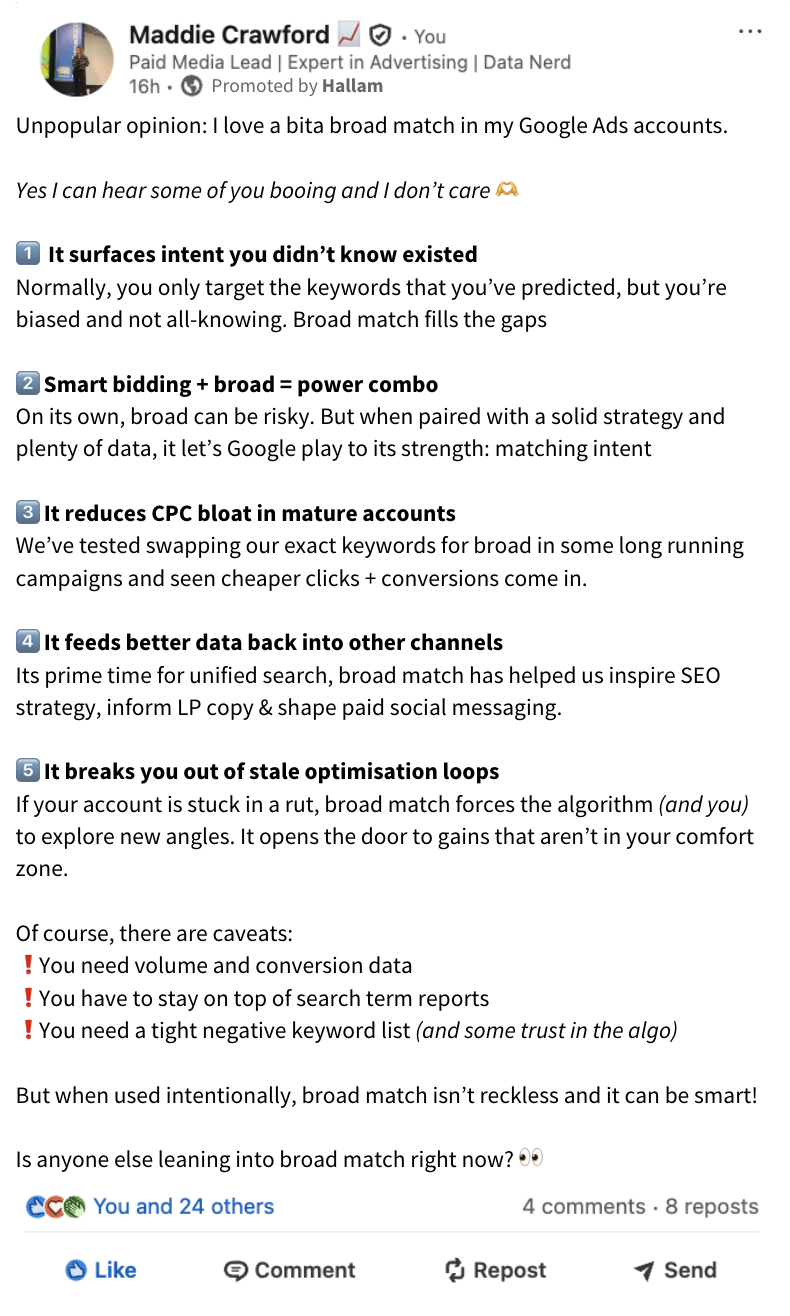
Unique opinions on industry topics
The definition of a thought leader is ‘a person whose views are taken to be authoritative and influential’, and so what would a thought leader be without their views and opinions.
This example is all about showing your expertise, starting conversations and sparking debate.
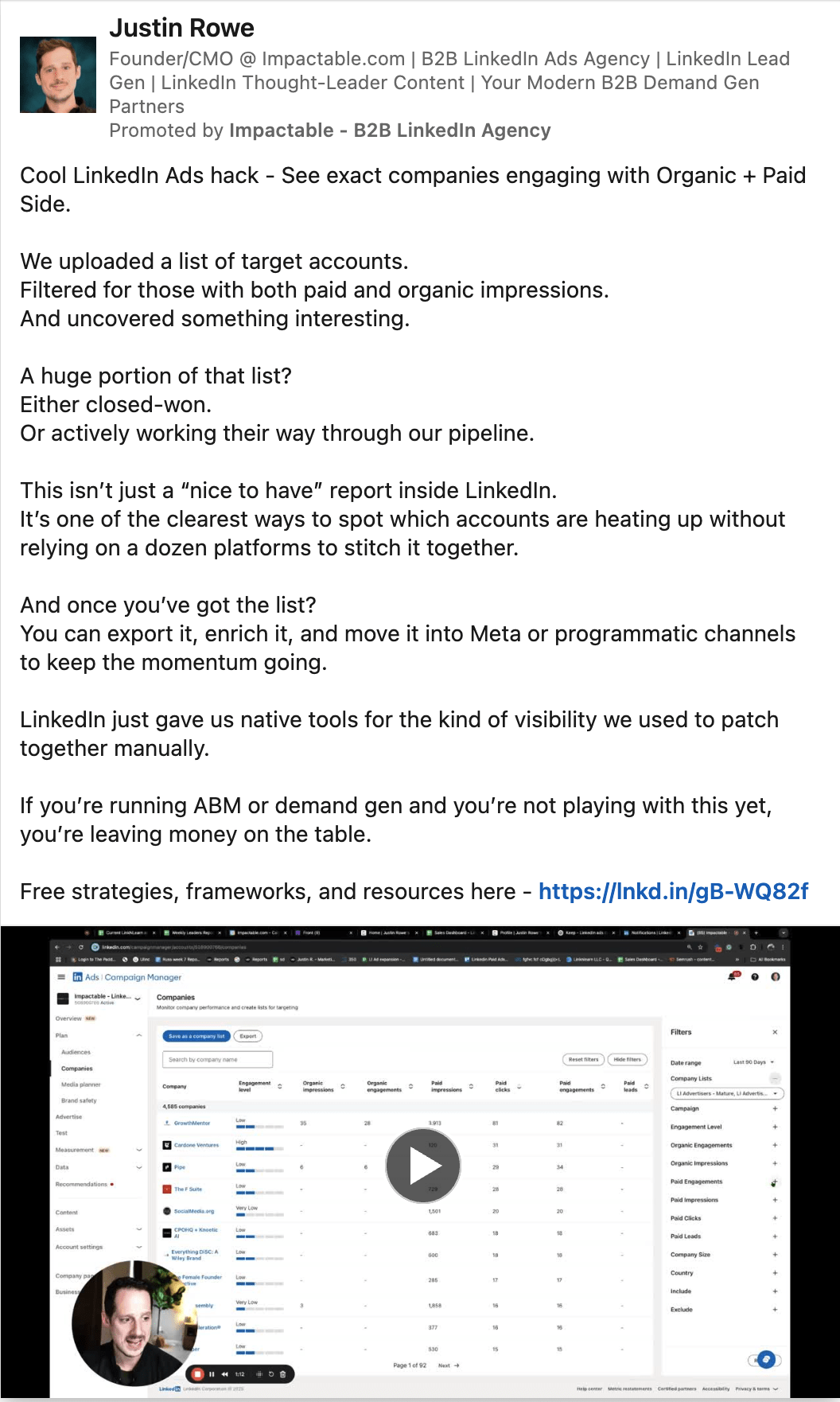
Educational content
If you have a complex idea, break it down into valuable takeaways or a step by step demo., Here’s an example of how Impactable have done it with their CEO Justin.
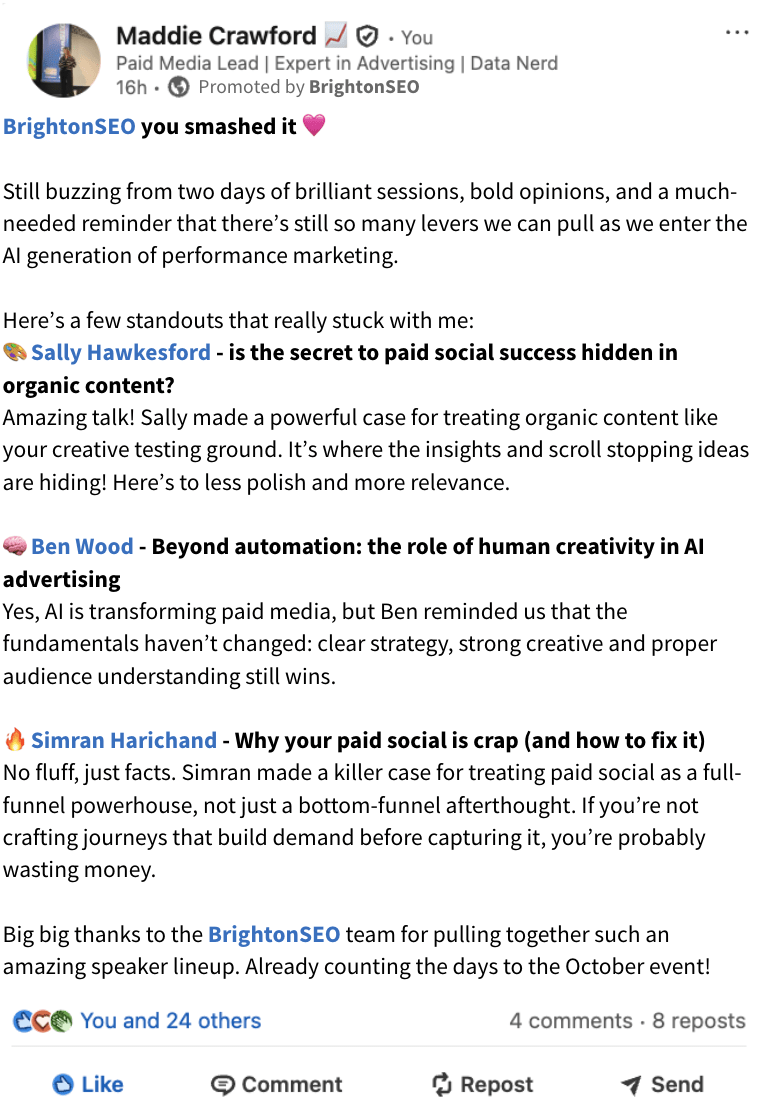
My favourite – but it’s rare! Good PR
If someone says something positive about your brand online, you want all the reach you can get out of it!
Here’s how I’d do it if I wanted to amplify organic content from conference attendees to drive more efficient sales for the next conference.
How to create a thought leadership ad that performs
Have a human approach
- Use an organic post that comes from a person with credibility and insight
- You want a natural tone of voice, not a rigid post that’s gone through iterations of corporate sign off
- Often, you may find that a post takes off organically and then you decide to sponsor it – sometimes the best ads are spontaneous
Make it worth the ad spend
- No fluff, personal, valuable or opinionated posts
- Hook attention in the first sentence to stop the scroll
- Break up text with line spacing, short paragraphs and emojis
Relevance over perfectionism
- A raw post is more relatable than an over-produced post
- Substance beats slickness
How to measure performance
Engagement is a useful signal, but it doesn’t tell the whole story. Before launching a campaign, decide what success looks like and measure performance against that objective.
For awareness campaigns, monitor reach within your target audience, frequency and engagement. For traffic campaigns, look beyond clicks to landing-page visits and engaged sessions. For lead generation, track lead quality, cost per qualified lead and, where possible, sales pipeline contribution.
Compare results with previous campaigns and relevant benchmarks, keeping the campaign objective and audience as consistent as possible. This helps you understand whether the creative is attracting attention from the right people, rather than simply generating more interactions.
Setting up your thought leadership ad in LinkedIn
You’ve done all the hard work by this point, now the setup and implementation is easy.
Before launching, make sure you have a suitable organic post, approval from the person whose content you want to sponsor, and a clear campaign objective. LinkedIn’s Campaign Manager interface and available options can change, so check the current in-platform guidance before following the setup steps below.
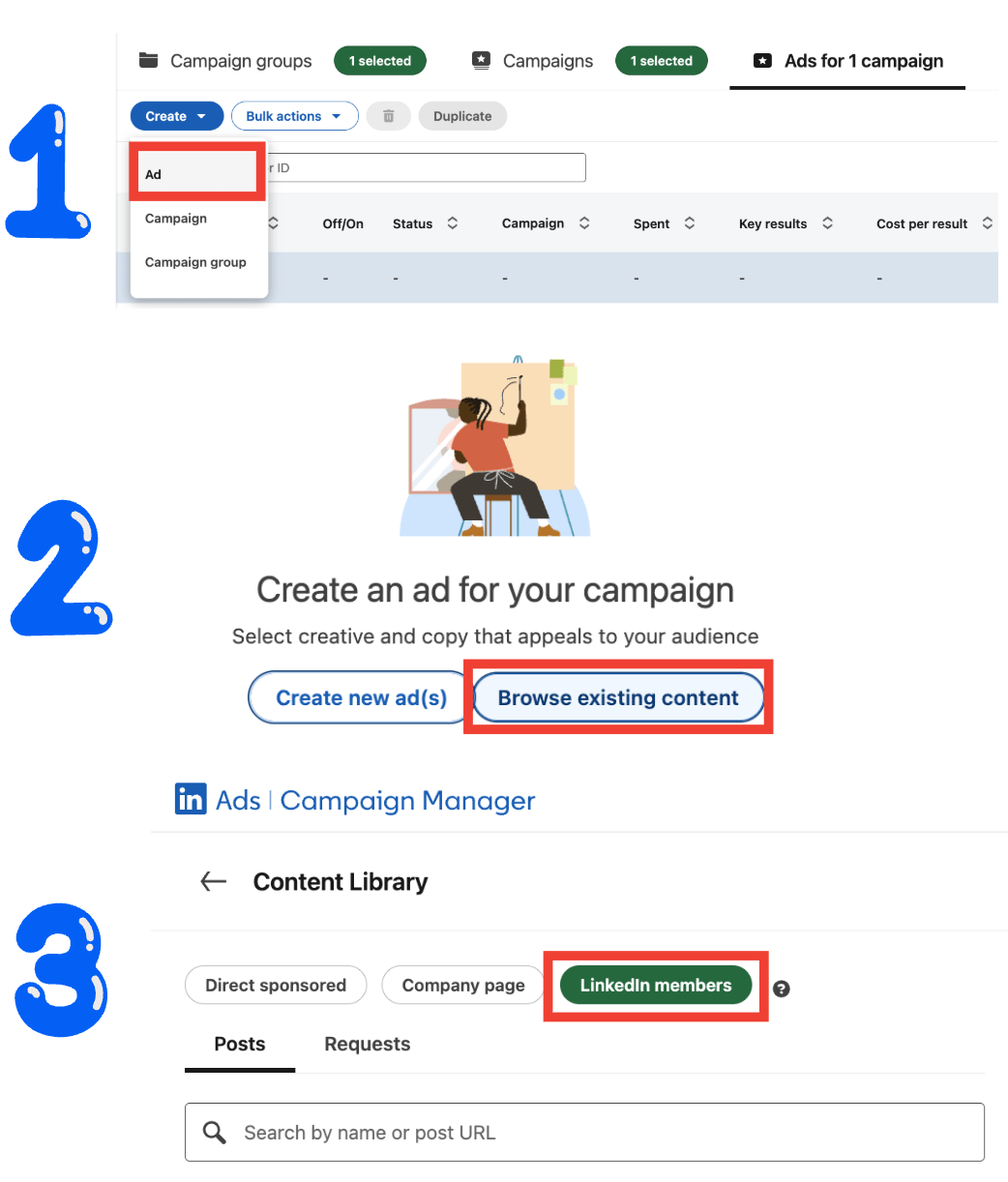
- Go to LinkedIn Campaign Manager
- Pick your campaign objective (I’d go with Brand Awareness)
- Tip: if the organic LinkedIn post contains a link, you aren’t closing the door to the possibility of traffic, even though your objective is awareness
- Go to the ads section & select browse existing content, which should open the content library page
- Select the posts tab and search by either member name or post URL.
- Tip: you can boost posts from employees of your company as well as users who are 1st or 2nd degree connections.
- Select the post you want to sponsor and click request approval to send a sponsorship request to them – the member will receive an email notifying them of your request
- Tip: its always best to prewarn someone of your plans to sponsor their posts to create a frictionless approval process and ad launch
- Once approved, you’ll be notified in campaign manager and can sponsor the post
Budgeting and targeting tips
I wouldn’t be a very good paid media lead, if I didn’t teach you how to make the most out of your ad spend:
- Focus on targeting high intent audiences, think decision makers, not entire industries
- Layer in retargeting to build trust in audiences who are almost ready to exit the top of your funnel
- Test and optimise, try different authors, hooks, post types, CTAs, with images or without, the options are endless!
- Measure lead quality, not just volume: A campaign that generates fewer but more relevant visits or qualified leads may be more valuable than one that attracts a high volume of low-intent engagement. Evaluate performance against your business objectives, not just the cost of each click.
Common mistakes to avoid
- Overly polished and sales-y content: users will scroll right past it
- Not being relatable: content must reflect the users world
- Promoting posts from inactive employees
- Forgetting to follow up: don’t put all this energy into brand awareness and engagement and leave it there
- Choosing creative based on reactions alone: A post can generate plenty of engagement without reaching the people who influence purchasing decisions. Consider audience relevance and downstream conversions, not just likes and comments.
- Failing to provide a useful next step: If a reader wants to learn more, give them a relevant guide, resource or service page to explore. Not every post needs a hard sell, but interested readers should have a clear next step.
In conclusion
Thought leadership ads are for marketers who understand the full funnel, and the 95/5 rule. They’re for businesses ready to play the long game, building brand awareness and trust to get a spot on users day one list, way before they’re ready to buy.
Because of that, consistency is key, and having a human voice is a must.
The strongest results come when credible thought leadership is part of a wider strategy: creating content your audience genuinely values, distributing it to the right people and measuring its contribution to business growth.
If you’re looking to connect your LinkedIn advertising with wider business objectives, explore Hallam’s Paid Media services. And if you need to develop original insights, expert perspectives and useful content that builds authority, discover our Content Marketing services.
Want to make your LinkedIn thought leadership work harder? Get in touch with our team to discuss your goals.