

It’s 2026, and Demand Gen is no longer the new kid Google keeps trying to introduce you to at the party. It’s been around long enough for us to have actual opinions about it, and a proper track record of clients actively running it. A lot has changed since 2023 and in 2026, Demand Gen looks quite a bit different.
What are Demand Gen campaigns?
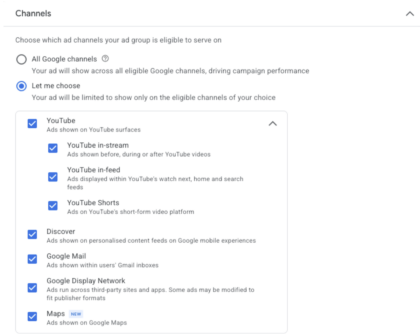
Demand Gen is a visual, audience-driven campaign type that serves image and video assets across Google’s properties: YouTube, Discover, Gmail, GDN, and now Maps. All Display campaigns will eventually become Demand Gen, so if you’ve been putting off getting to know it, consider this your notice.
It’s Google’s attempt to be more full-funnel, to be found before the search even begins. None of this is news, exactly. Demand Gen has been around a while, it’s just that the properties it covers keep quietly expanding. It started with YouTube, Discover and Gmail, and has since picked up GDN and, most recently, Maps.
In 2025, Google also gave us more control over where our ads actually show up. So if you fancy running a YouTube-only Demand Gen campaign, you can.
Doesn’t PMax serve on the same properties, though?
Yes, it does. But the two campaign types are after very different things.
Demand Gen doesn’t touch Search or Shopping, unlike PMax. Demand Gen exists to generate demand so you can get found, to encourage product discovery. PMax, on the other hand, works at the bottom of the funnel, milking as many conversions as it possibly can from every channel available to it.
Why use Demand Gen?
I’ll be honest, this used to be a question I asked myself in the early days of Demand Gen. The benefits genuinely didn’t land for me. In 2026, I have a fair few clients actively running it. Here’s what changed my mind.
- Not everyone is in-market right now, and that matters. It’s the same argument we make for all upper-funnel activity. In B2B especially, only around 5% of your market is actively looking at any given moment. Run Search, Shopping and PMax alone, and you’re ignoring the other 95%. You need to show up during the research, not just swoop in for the harvest.
- It lets your product be seen, not just searched for. If you’re confined to Google Ads and don’t have the budget to branch into other channels, Demand Gen is your way of climbing up the funnel within the interface you already know. Video, YouTube especially, has become a huge part of the customer journey, and that’s only grown over the last few years. YouTube’s reach grew by 39.7 million users in the 12 months to January 2025. Not a number to be sneezed at.
- It’s the last place similar audiences live. Demand Gen is the only campaign type where you can still build similar-to audiences, which were otherwise retired back in 2023. There’s a strong case for feeding your first-party data into Google Ads generally, but this is one of the standout reasons to actually do it.
- It can prove its own worth. The campaign optimises for conversions and reports on assisted revenue and conversions, so you can show the impact if growing revenue is the goal. One caveat: a lot of this is view-through conversion data, so be careful you’re not double-counting.
Audience strategy on Demand Gen
One of Demand Gen’s biggest strengths is targeting, so your audience strategy needs to reflect that. Here’s how I like to build mine:
- Lookalikes: I’ve said it before and I’ll say it again: I’m a big fan of lookalikes, provided your first-party data is clean. Garbage in, garbage out. But when the data’s good, this audience is an absolute gold mine.
- Remarketing: often the forgotten tactic, and another gold mine hiding in plain sight. Remarketing through Search still relies on someone actively searching. Through Demand Gen, you can find people where they already are, even when they’re not looking for you at all.
- In-market and affinity audiences: Google gives us plenty of other segments to work with, so use them where they fit. They’re particularly useful if your own first-party data isn’t large or clean enough to lean on yet. If you have observation audiences running on your Search campaigns, this one should be quite an easy build.
- Competitor site visitors: a slightly quirky one, but I like building “visited similar websites to” audiences using competitor sites, when I want to sharpen up the targeting.
Common errors you can make with Demand Gen
It’s remarkably easy to launch a Demand Gen campaign and, within days, convince yourself it’s not working. Been there, done that. But that’s a dangerous place to sit. Two pitfalls worth avoiding:
- Expecting instant revenue. Demand Gen is a demand-generation campaign type, not a demand-harvest one. Its real impact shows up in the wider measurement picture. Look at your branded search volume, share of search, the halo effect on CPA and conversions, and both direct and organic traffic. Judge it against last-click revenue and you’ll write it off far too soon.
- Running with below-par creative. This is a creative-first campaign type, full stop. Your creative has to reflect that; it needs to stop the scroll, exactly as it would on any other social platform. Weak assets will sink an otherwise sound strategy.
Demand Gen isn’t the future of Google Ads anymore, it’s just part of the present. If you’ve been treating it as an occasional add-on rather than a proper strand of your funnel, 2026 is a good time to change that.
Fancy working with an award-winning Paid Media agency?
Looking to build demand gen into your wider paid strategy? Get in touch with our Paid Media team.