
You don’t get to call yourself trustworthy
Trust is a funny word. “Trust me.” Perhaps it’s a peculiarly British cynicism in me, but when those words are uttered, what is conjured up in my mind is “absolutely I will not trust you”. I imagine you’re fairly similar in this regard, and when you’re watching the news and see grinning politicians of any affiliation uttering the same T-word – “you can trust us” – you’re probably twice as cynical as you were before. If anything, perhaps the existence of politicians is why we have trouble trusting anyone at all.
You wouldn’t be alone. Ipsos publish their Veracity Index annually, and it shows that the most trustworthy in our world are the likes of nurses and doctors, whereas down at the very bottom of the trust barrel are creatures such as social media influencers, politicians, advertising executives and business leaders. In fact business leaders are trusted less than bankers.
A B2B brand can say they’re trustworthy, for sure. But clearly, the people differ in opinion as standard. This isn’t a crisis, this is simply the operational standard of the business world. In our industry combining both advertising and business, trust is a very hard to acquire commodity.
Are all brands equally (un)trustworthy?
Newsweek pointed out last year, in its “Most Trusted Brands” survey (B2C admittedly) that 69 percent of people in the United Kingdom said that “trust in a brand is important when making a purchase”. Which is pretty obvious when you think about it; in fact the only surprise to me is that it’s not higher, and that 31 percent of people are playing fast and loose with their purchases.
What’s interesting is that, on the big list, none of them are particularly famous for saying they’re trustworthy to my mind. Boots doesn’t tend to run ads about trust. Tefal doesn’t – its high ranking about trust is achieved in spite of the kicking it seems to get on its Trustpilot reviews.
I’d argue trust is even more important in B2B than with B2C, largely as the emotions are more charged. Why? Because your job is on the line. “No one ever got fired for buying IBM” wasn’t merely one of the great B2B positioning postures, it was a behavioural truth of how risk and trust actually works inside organisations.
But there’s a macro effect: these are all famous brands to begin with. There is a psychological mechanism at work here, and it has a name: the Mere Exposure Effect, first identified by Robert Zajonc in his 1968 paper in the Journal of Personality and Social Psychology; the finding that repeated exposure to a stimulus, any stimulus, is sufficient to generate preference for it. In evolutionary terms, we as humans would trust the familiar (those nice red berries, eat, live) and mistrust the unfamiliar (odd black berries, put in mouth, dead, probably shouldn’t have eaten it).
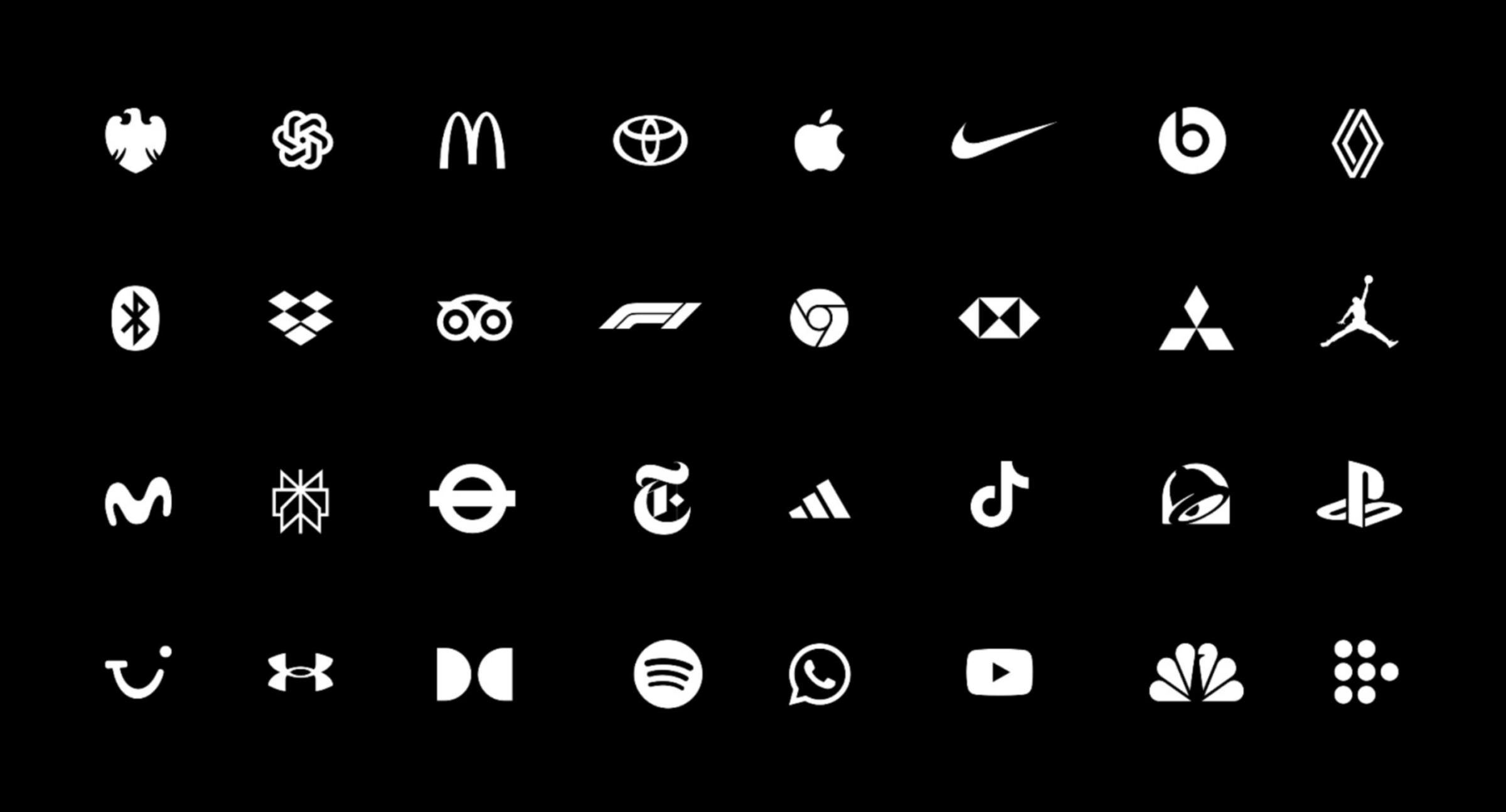
Effects such as these go some way to explaining the marketing science around mental availability – the idea, advanced by the Ehrenberg-Bass Institute, that brands win not by being loved but by being the first thing that comes to mind at the moment of purchase.
All of which is to say, Trust isn’t quite the right word in B2B – or rather, it is not the only word to describe what we mean here. When we say trust, we really mean familiarity, the safe option, the option that is good for a career. Not necessarily the best, not necessarily the most ethical, but actually: the familiar one.
Online reviews
There are many of you likely shouting at your screen right now: but what about customer reviews! What about Trustpilot!
Trustpilot removed 4.5 million fake reviews in 2024 – 7.4% of all reviews submitted that year. Which means roughly one in fourteen reviews on the platform is fabricated. That’s not a rounding error. An independent analysis found up to 14% of the platform’s reviews across major platforms were likely fake, with over 2.3 million strongly suspected of being AI-generated. You can only imagine what that’s going to be like when an army of positive review AI agents advances forth to ruin what’s left of the internet.
So lots of great reviews? Maybe not so great.
Bad reviews are weirdly good signifiers of trust. Seeing whether companies respond to negative reviews is an important factor in 85% of consumers’ general purchase process. That’s from Reputation’s survey, reported by CX Dive. “A negative review where there’s some sense the company made good or the company made a correction almost becomes a super-powered review. The authenticity of it – they love that this is a normal company with normal humans.”
Only about 5% of businesses respond to their online reviews – despite the vast majority of consumers expecting a response. That gap is where authenticity lives and almost nobody is occupying it.

Reviews aren’t a trust-building tool – they’re a trust-revealing one. A suspiciously perfect score reads as manufactured. A realistic mix of positive and negative reviews is a top motivator to purchase for customers, and though this is largely B2C, the principles would be little different to B2B.
Imperfection, handled well, is more credible than perfection.
Which goes back to what I implied at the start, in that the brands that claim trustworthiness are doing it wrong. The ones that demonstrate it – including by handling failure openly – are the ones that actually earn it.
The MORTN scale & market orientation
Now we’re familiar (pun intended) with the context, let’s run a scenario. After reading a LinkedIn post about trust, your commander-in-chief has emphasised her point emphatically. Your B2B brand needs to be trusted. In fact, to be the most trusted brand in your industry. She has made her instructions quite clear and, as a marketing lead – that interface with the customer – you’ve been tasked with sorting this out. You’re now scratching your head thinking what to do.
How customer centric are you? Do you actually care about customers – no, really care about their needs? Do you speak to them or are they kept at a distance? Not only are most companies far less customer centric, or market orientated, than they believe, but luckily for you, a methodology, a scale, exists so that the degree to which it’s true doesn’t have to come from the “beliefs” of your board.
The MORTN Scale is a mirror you can hold up to your organisation.
It’s pretty simple, deceptively so. Developed in the late 1990s by Rohit Deshpandé and John Farley, the MORTN Scale presents a series of simple questions that are to be answered on a five-point scale. Do you run customer surveys? Are you better than your competitors at looking for customer satisfaction? Do you even exist to serve customers in the first place?
Here’s the thing though: it’s meant to be filled out by employees and analysed each year, so the business can see if its level of customer focus is improving or getting worse. It strikes me as fundamental to the notion of trust: how can you possibly expect customers or clients to trust your brand if you don’t give them the time of day to begin with? The CEO who wants to be the most trusted brand in her sector needs to answer those questions before she commissions anything, because if the business scores poorly – if customer intelligence doesn’t travel between departments, if objectives derive from product capability rather than customer need, if satisfaction is measured infrequently or not at all – then trust cannot be bolted on as some extrinsic extra.
The brand is only ever a promise. Market orientation is what determines whether anything underneath it is true.

A position(ing) of trust
Now we’ve established you actually do care about your customers, it’s time to become familiar in the way you present to them – because we’ve already established that familiarity is the psychological mechanism to trust. This is pretty simple and unfortunately there are no shortcuts.
First of all, you need to build a really solid brand positioning, which I’ve spoken about previously as a foundation of strategy. It is not a shortcut, but again the fundamentals are deceptively simple – and it is also one of the most misunderstood phrases in marketing.
This requires hard thinking about what you do really well and can own. It requires thinking about what you do that’s relatively different or better than the competition. And it requires speaking to customers (market orientation) to find out what they care about. Where those areas overlap is the sweet spot of brand positioning.
Positioning helps us find that truth about the brand – a truth you can own, a truth customers are interested in – which becomes the foundational reference for everything else.
Think Volvo’s safety vs BMW’s performance – still cars, still with four wheels, still doing pretty much the same thing, but each brand owning different positioning territory. Or Aldi’s value vs Waitrose’s premium quality. Or Greggs cheap and cheerful and don’t ask what’s in it vs Pret’s chance you will actually have something nutritious for lunch.
If you want to build familiarity – which is safety – it has to be built on strong positioning foundations so nothing that follows is wasted effort or money.
Familiarity breeds contracts not contempt
So we’ve established broadly what we mean by trust and the psychological underpinnings, and we also know that online reviews don’t necessarily help that much – arguably less so in the AI era. We move to market orientation (demonstrably caring about customers and their needs in the first place), through planting a positioning flag in clear space within your industry.
We’ve already suggested how trust is built around familiarity – and ultimately in marketing terms salience, the ability to come to mind in buying situations. Or fame, in other words, which is not so easy a thing to acquire. It is the very important bit – arguably the most important – when we’re talking about scaling trust. It is also the bit that flip-floppers or those attracted to shiny new things will hate, because it means not only developing distinctiveness, but then being relentlessly consistent in its execution.

Without a doubt you need to have a suite of creative assets that make your brand unmistakably you as you scale. You’re not trying to be anyone else (a trust killer for sure); you’re trying to be yourself in the loudest and most entertaining way possible. This is distinctiveness and it’s a fundamental of marketing science.
Distinctiveness is not the same thing as differentiation, and conflating the two is one of marketing’s more expensive category errors. Differentiation says: we are better than the competition in these specific ways. Distinctiveness says: you would know us anywhere. Byron Sharp’s work at the Ehrenberg-Bass Institute makes the case plainly – consistent use of what we all now call “distinctive brand assets”, colours, logos, characters, taglines, sonic identity, shapes, builds the mental structures that allow a brand to be recognised and recalled without conscious effort. A distinctive brand doesn’t need to be explained because it has already arrived as familiar.
The brands that become famous, that become the safe and familiar choice, are the ones that showed up consistently, said the same thing, looked the same way, for long enough that the market couldn’t ignore them. This is not a creative opinion because it is simply how memory works.
Which brings us to the uncomfortable bit. Most B2B marketing budgets are weighted toward short-term lead generation – the stuff that can be measured by Friday, reported to the board by Monday, and used to justify the department’s existence by Christmas. Brand investment, by contrast, is an act of organisational patience, and patience is not a quality typically celebrated in quarterly planning cycles. A new CMO arrives, a rebrand gets commissioned, the accumulated familiarity – the very thing you were building – gets thrown in a skip, and then everyone wonders why trust is so hard to acquire.
As with many sensible things in business and in marketing, taking a long term view – and sticking to that view – is critical.
Trust TL;DR
Trust, then, is earned by some very simple things rooted in human psychology and the firmest principles of marketing.
Focus on the customer.
Claim a strong brand positioning.
Build assets of distinctiveness.
Deploy with stubborn consistency over time – in different channels, with different investment, but always consistently.
Let brand familiarity do its patient work.
And when things go wrong – because they will – handle it openly, because authenticity is what converts familiarity into genuine trust.
Trust me.
Looking to build trust and be chosen before the search begins? Get in touch.