

The B2B search world has shifted. If you’re still measuring success solely through keyword rankings and blue links, you’re looking at a system that’s already been redesigned.
At Hallam, we realised early that simply using AI to write faster blogs was a race to the bottom. In a world where everyone can generate 2,000 words of fluff in seconds, the value of content has inverted. The real opportunity wasn’t in efficiency – it was in intelligence. We restructured our entire agency to move from manual data processing to proactive strategy.
Here is how we integrated Large Language Models (LLMs) into our nervous system to protect client revenue and predict where search is going next.
From Share of Search to Share of LLM
For years, the gold standard for brand health was Share of Search. But in an era where B2B buyers ask ChatGPT or Gemini to ‘compare the top three vendors for Fintech HR software’, traditional search volume doesn’t tell the whole story.
We developed a proprietary framework called Share of LLM (SoLLM). So instead of just tracking clicks, we now measure how often a brand is cited, mentioned or recommended within LLM responses.
“Our Share of LLM report helps us to see at-a-glance the opportunity we have vs. our competitors on where we’re showing up in the LLMs versus where we’re not, in turn helping us streamline our efforts and put time and resources into the right areas. This report accelerates our ability to get a much better grasp of this new channel opportunity to reach and influence our market.”
Kathy Harvey, Marketing Director at Infodesk
The human insight
Our research found that branded web mentions are actually up to three times more influential than traditional backlinks when it comes to driving LLM citations. If you want to exist in the AI shortlist, your brand reputation matters more than your technical link profile.
Take a recent project for a global B2B SaaS provider. They were dominant in traditional SERPs but invisible in ChatGPT’s recommendations. By pivoting their strategy toward digital PR and high-authority brand mentions, rather than just chasing domain rating, we saw their SoLLM increase by 45% in six months. This led to a direct uplift in high-intent demo requests that traditional SEO tools couldn’t explain.
The Third Eye – moving beyond manual monitoring
Monitoring site health is a necessity, but for complex B2B sites with thousands of pages, it’s a time-sink for experts who should be thinking, not checking. Traditional SEOcan be great in telling you what changed, not why it matters.
We built an automated alert system nicknamed The Third Eye.
The workflow: It tracks client sitemaps every hour, checking for page additions or deletions.
The AI twist: When it spots a change, it passes the new content to Gemini, which summarises exactly what has been updated or lost and identifies potential SEO risks.
The real-world impact: For one major retail client, this proactive monitoring helped reduce reliance on paid media. The system caught a technical error that had wiped out a high-converting category page. Because we caught it within the hour, we saved them lost revenue that would have otherwise been spent on emergency PPC to plug the gap.
Predictive SEO: finding fan-out queries
The biggest flaw in traditional SEO is that keyword data is almost always lagging. By the time a tool like Ahrefs shows you search volume, your competitors are already there.
We’ve pivoted to Predictive SEO. By scraping community discussions on platforms like Reddit and synthesising the text via LLMs, we identify user pain points before they become trending keywords.
The ‘fan-out strategy: Traditional SEO looks at the head term whereas Predictive SEO looks at the fan-out – the specific, nuanced questions that AI Overviews love to pull from.
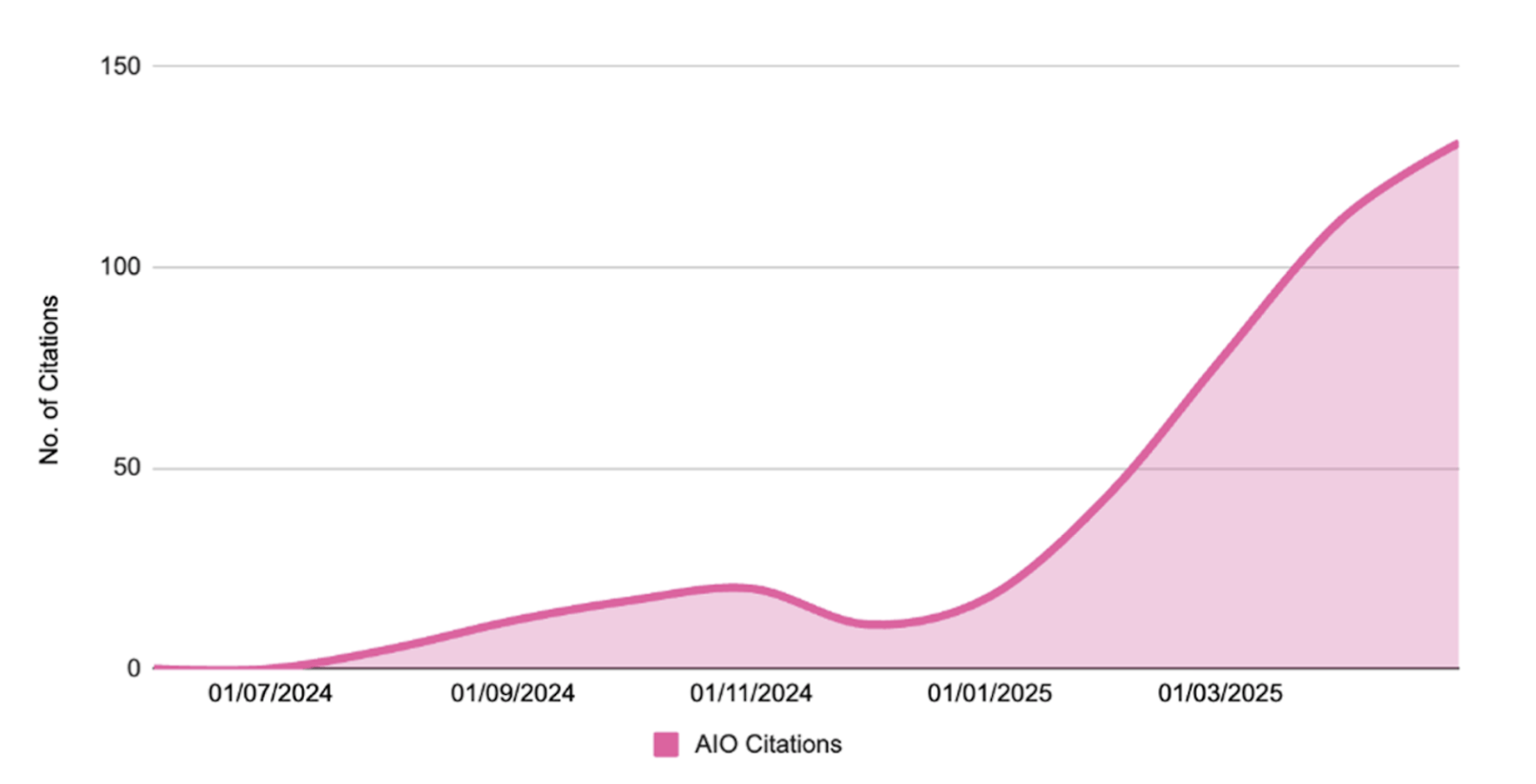
For a client in the renewable energy sector, we noticed a spike in Reddit threads discussing the specific failure rates of a new type of solar inverter which coincidentally had zero search volume in traditional SEO tools. We created an expert-led guide addressing these specific technical concerns. Within weeks, our client was the primary source for the AI Overview on that topic. We didn’t wait for the data; we anticipated the need.
Re-engineering the agency model
You can’t run a modern search strategy with an outdated team structure. In 2025, we became 100% employee-owned and restructured our workflows to be AI-first. This wasn’t a cost-cutting exercise; it was an evolution.
We found that our SEO specialists were spending roughly 40% of their month on manual data cleaning, reporting, and basic audit tasks. By building custom GPT-based tools to handle the grunt work, we flipped the script.
The Shift: Our team now spends 90% of their time on strategy and innovation.
The guru advantage: We created an internal Organic Guru GPT. This isn’t a public bot; it’s a closed system trained on Hallam’s proprietary methodologies, past winning award entries, and internal SOPs. It means a junior consultant can access the collective brain of our senior directors instantly, ensuring our clients get a consistent, high-level of expertise regardless of who is in the room.
Case Study: Cabin Master
An example of where our work has seen huge success is with client Cabin Master. They faced the classic challenge of how to maintain dominance in a highly competitive market where customer research is increasingly happening within AI interfaces.
By using our LLM-driven topical mapping process, we moved beyond just targeting terms such as ‘garden rooms’. We used AI to analyse thousands of customer questions and sentiment patterns to identify the specific lifestyle and technical concerns that were fanning out from the core topic.
We built a content ecosystem that wasn’t just SEO friendly, but LLM-authoritative. As a result, Cabin Master didn’t just see a rise in traditional traffic; they became a primary citation for AI Overviews. This strategic shift helped drive a 295% increase in organic events over a period where traditional search volume for their sector was fluctuating. It proved that when you stop chasing keywords and start building authority, you protect yourself against algorithm updates.
Build for the preferred answer
The goal of search has changed. It’s no longer just about being found on Google; it’s about being the preferred answer for the LLMs of the future.
Share of LLM isn’t just a metric; it’s a philosophy. It requires a move away from vanity content and towards authority content.
Whether we’re reverse-engineering AI Overviews for clients or mining Reddit for future trends, the principle remains the same: use the machines to do the heavy lifting, so the humans can do the heavy thinking. The agencies that thrive in 2026 won’t be the ones with the most bots – they’ll be the ones who know how to direct them.
Download our full whitepaper Share of Search vs. Share of LLM: The new measure of authority for B2B brands here.
Equally, contact us to find out how you can improve your LLM visibility.